That’s right. It’s almost time for me to painstakingly remove myself from all the projects and I’ve invested in and the people whose lives I have been a part of, even if for a second. I feel like an awkward cephalopod that’s spent all its energy wrapping its arms around something only to be pulled away, inch by inch. If the imagery sounds jarring, I promise you the feeling is even worse.
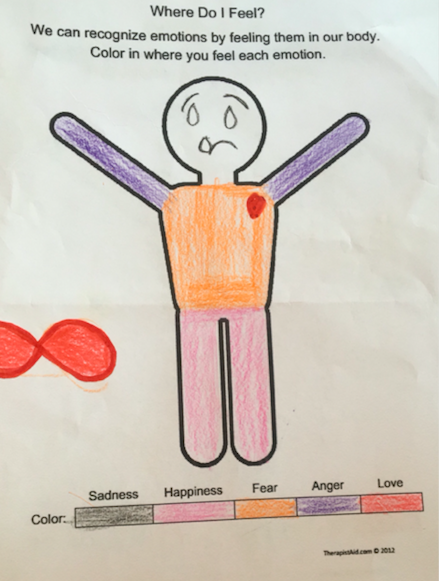
Why is this such a difficult process? Well, let’s start with the kids. The art and play therapy sessions have evolved in some really amazing ways. From connecting emotions and thoughts to actions, to exploring psychosomatic symptoms, its been amazing to see these kids open up and explore how they feel. And of course inevitably, the more time I’ve spent here the more attached I’ve become to them and their laughter, hugs, and contagious energy. But now I have to focus my attention on my exit strategy, and it’s a fine balance: I need to find a way to leave without simply vanishing from their lives (as so many have done before), but at the same time, if I make a big deal out of my leaving, I’m also emphasizing the fact that they are being left behind, that they—unlike myself—cannot leave the island. Like everything we do here, it’s vital that all of our actions are done in the interests of the kids (or the beneficiaries) and not ourselves, so even just the act of saying goodbye takes a great deal of thought and preparation.
Children learn about psychosomatic symptoms through a drawing exercise
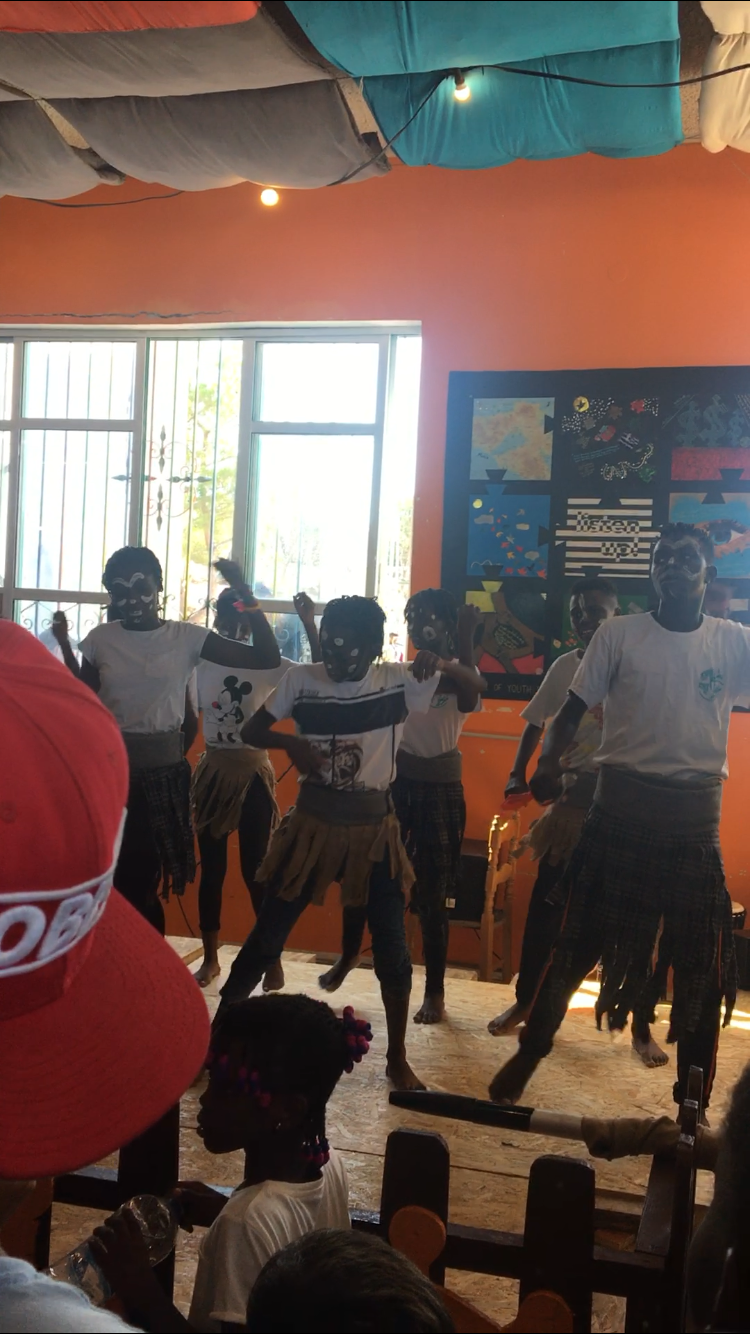
It’s a challenge that looms closer each day, and I’m not exactly sure how I’m going to face it. One thing that’s for sure is that these kids continue to amaze me. Just last week was African Cultures Day at the School of Peace and I got to see my students performing a Congolese dance. I sent a video of it to a friend who replied, “refugee camps on the news are always so depressing… It’s amazing for me to see how happy everybody looks.” And I realized that it was this inside perspective that I have, that one can’t get from the news—the insight into the smiles, courage and strength that these children constantly show me—that I might miss the most. But that’s also something that I will never have to say goodbye to.
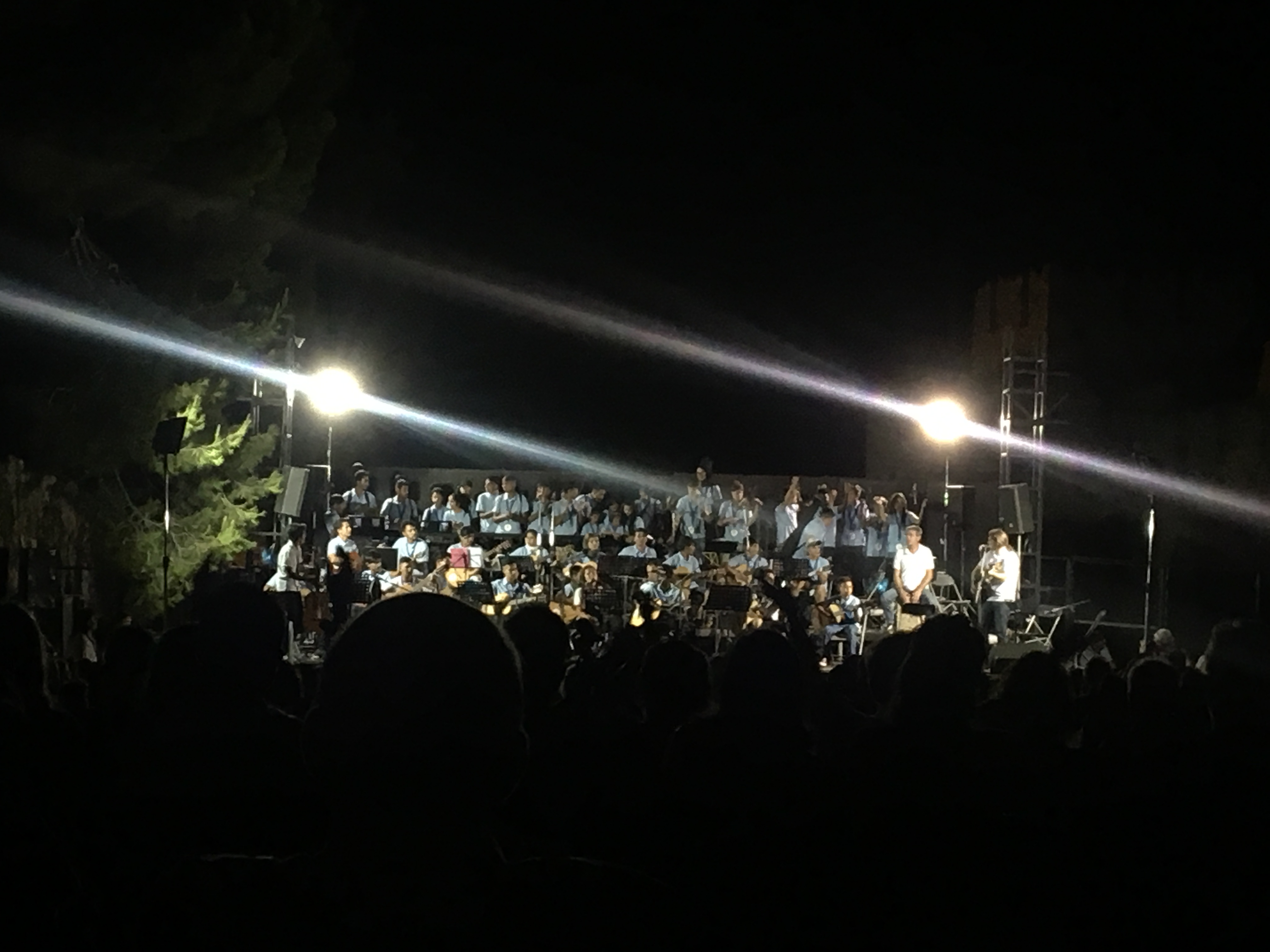
Concert played by musicians from Moria and Karatape camps
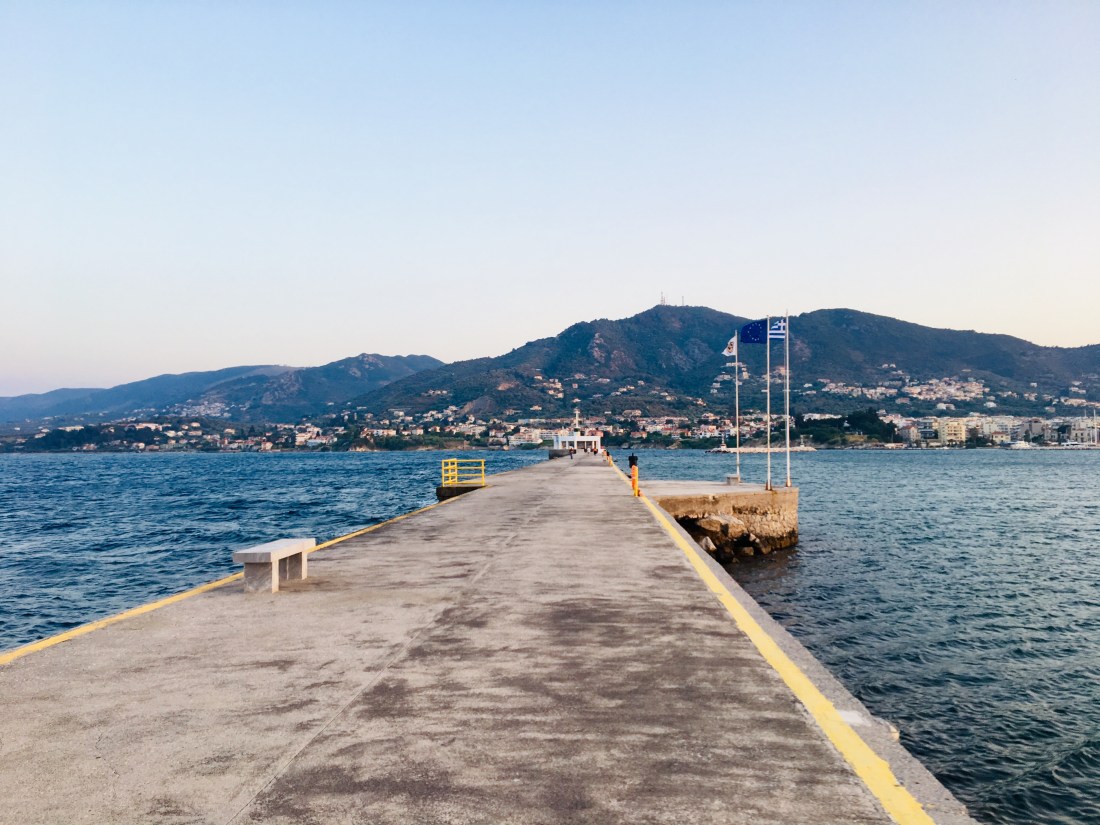
An open air concert with musicians from Moria and Karatape refugee camps. A field trip with the School of Peace to a hiking trail in the mountains. Introducing meditation techniques to our art/play therapy programs with the kids. I’m sitting in my apartment with all the widows open, looking out onto the Mytilene port and trying to process everything that I got to be a part of this week. It’s a strange day today; the typical 85 degree heat and relentless sun has been replaced by heavy rains and cool humidity. It’s eerily quiet on the busy street outside my window, but I’m not sure if it’s the weather or just the typical speed for a Sunday morning.
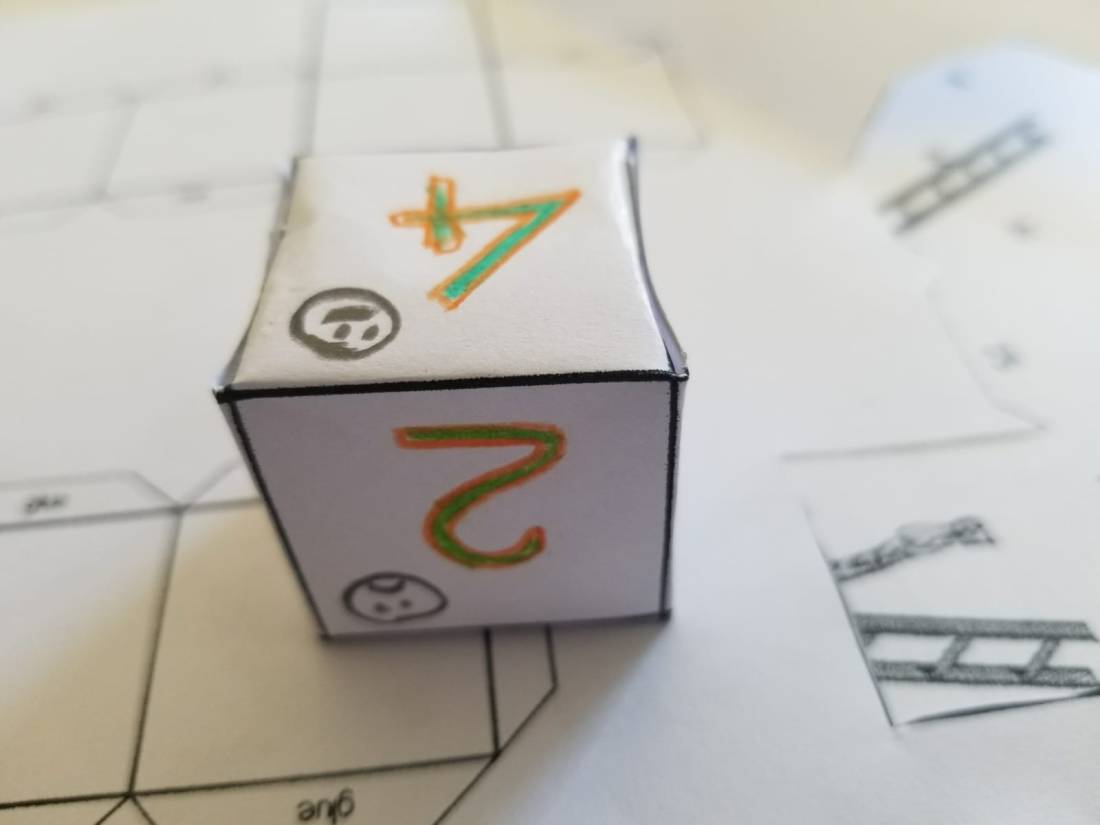
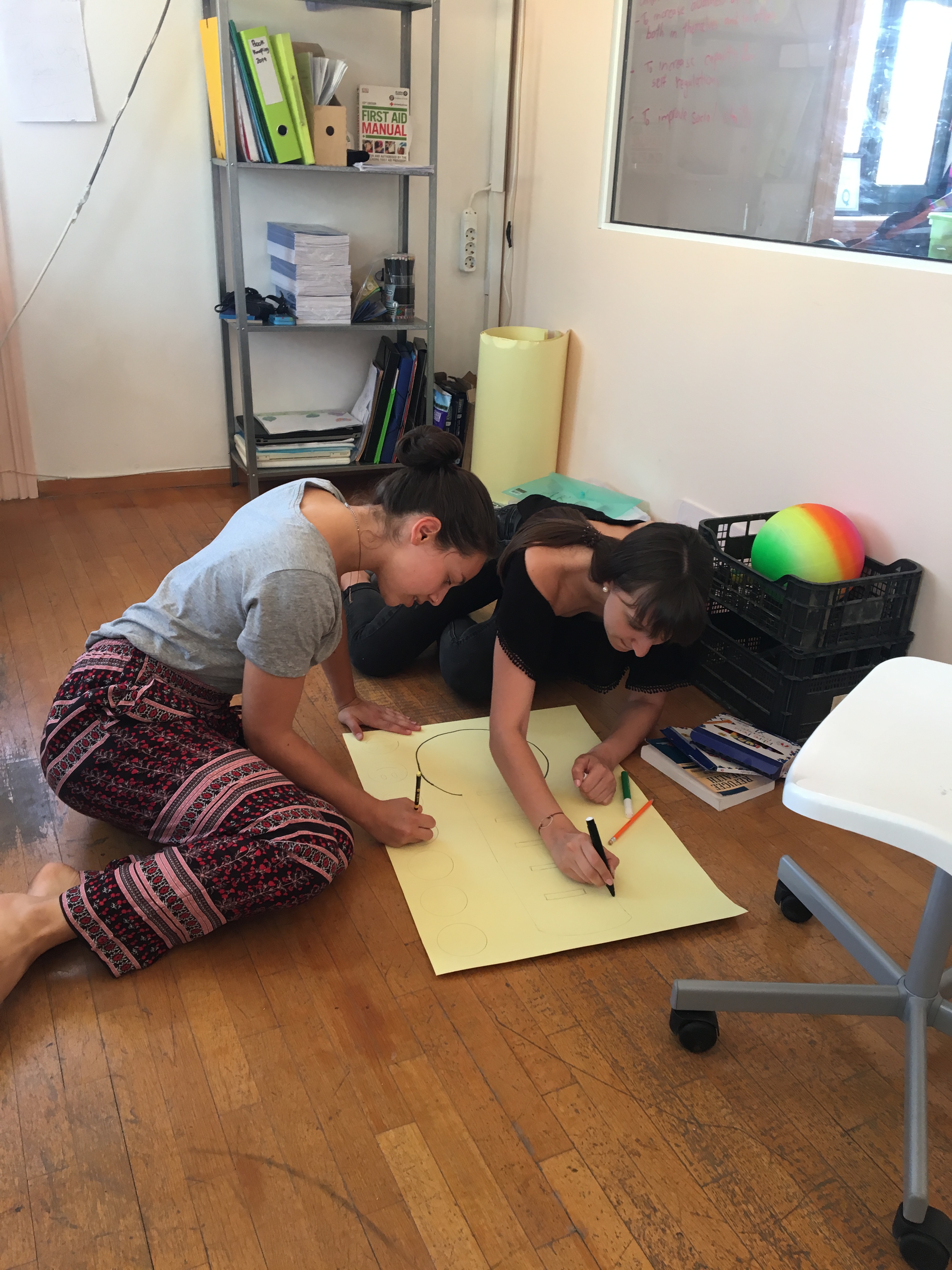
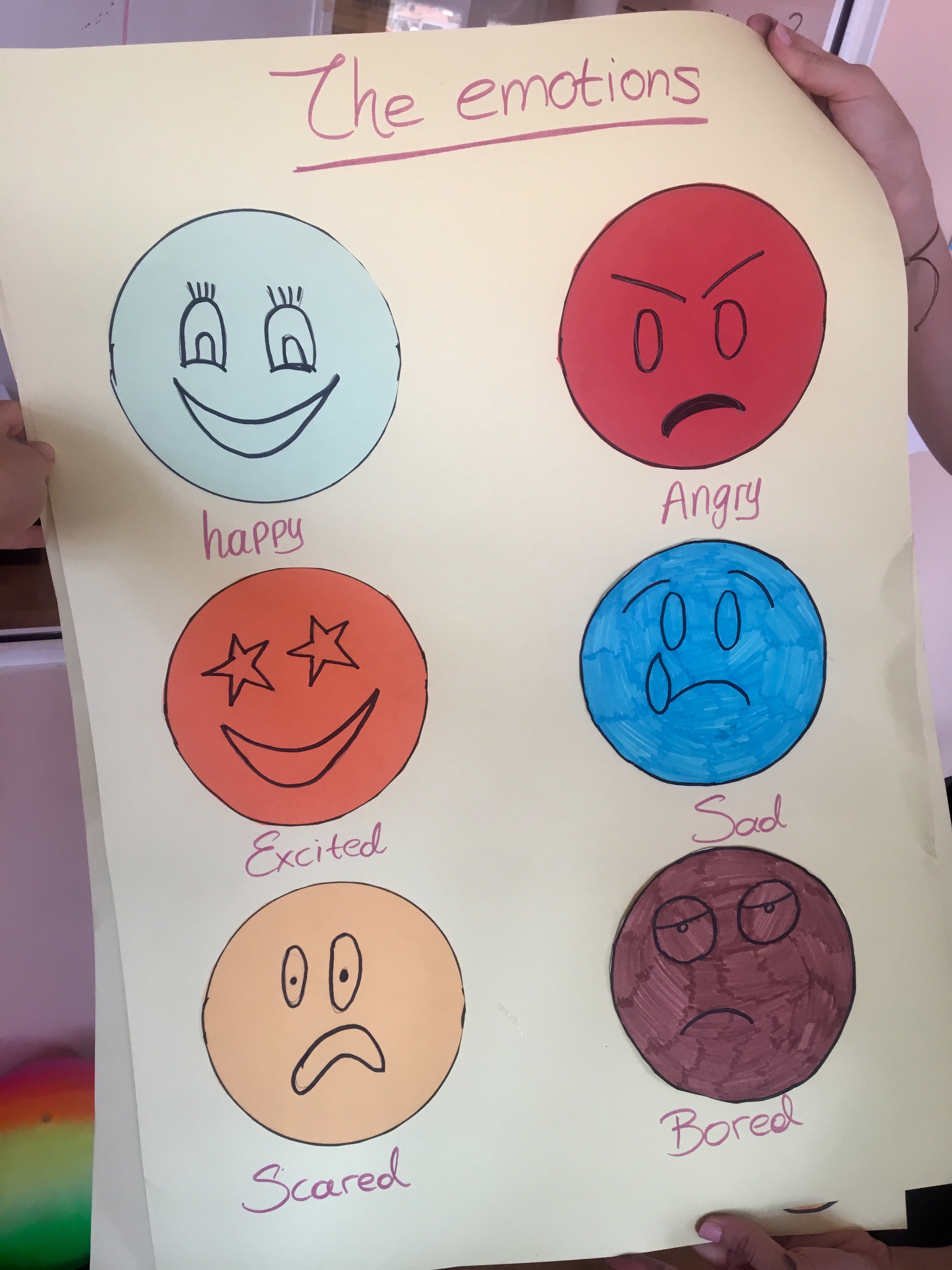
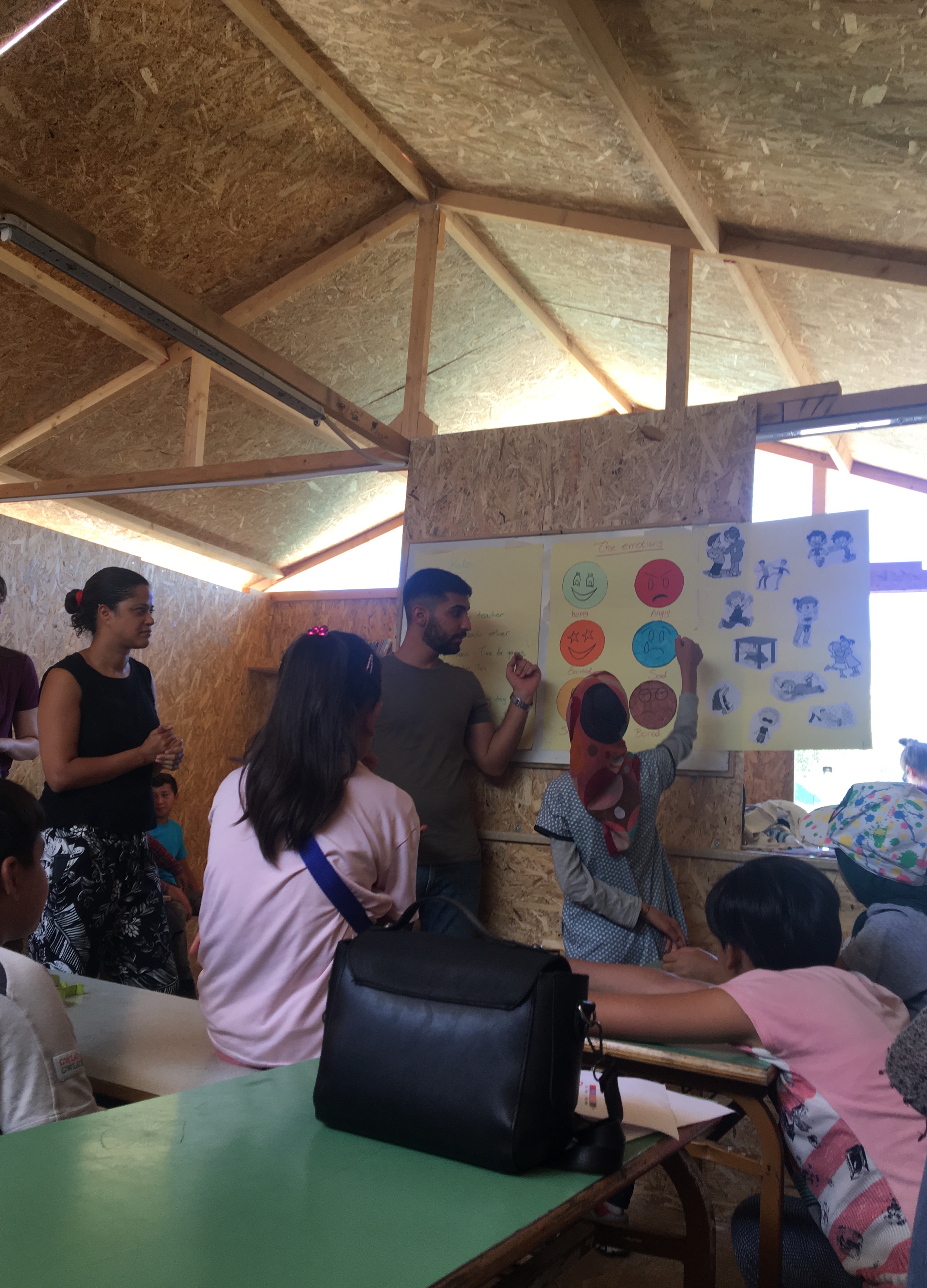
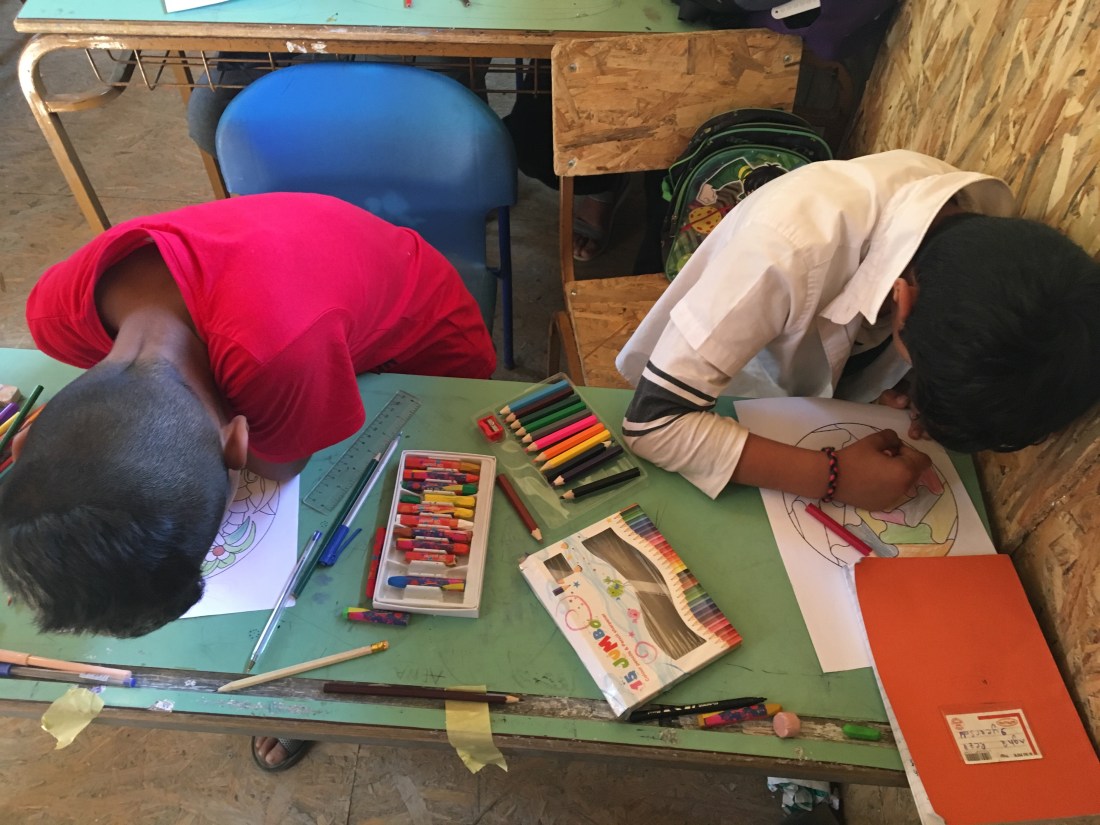
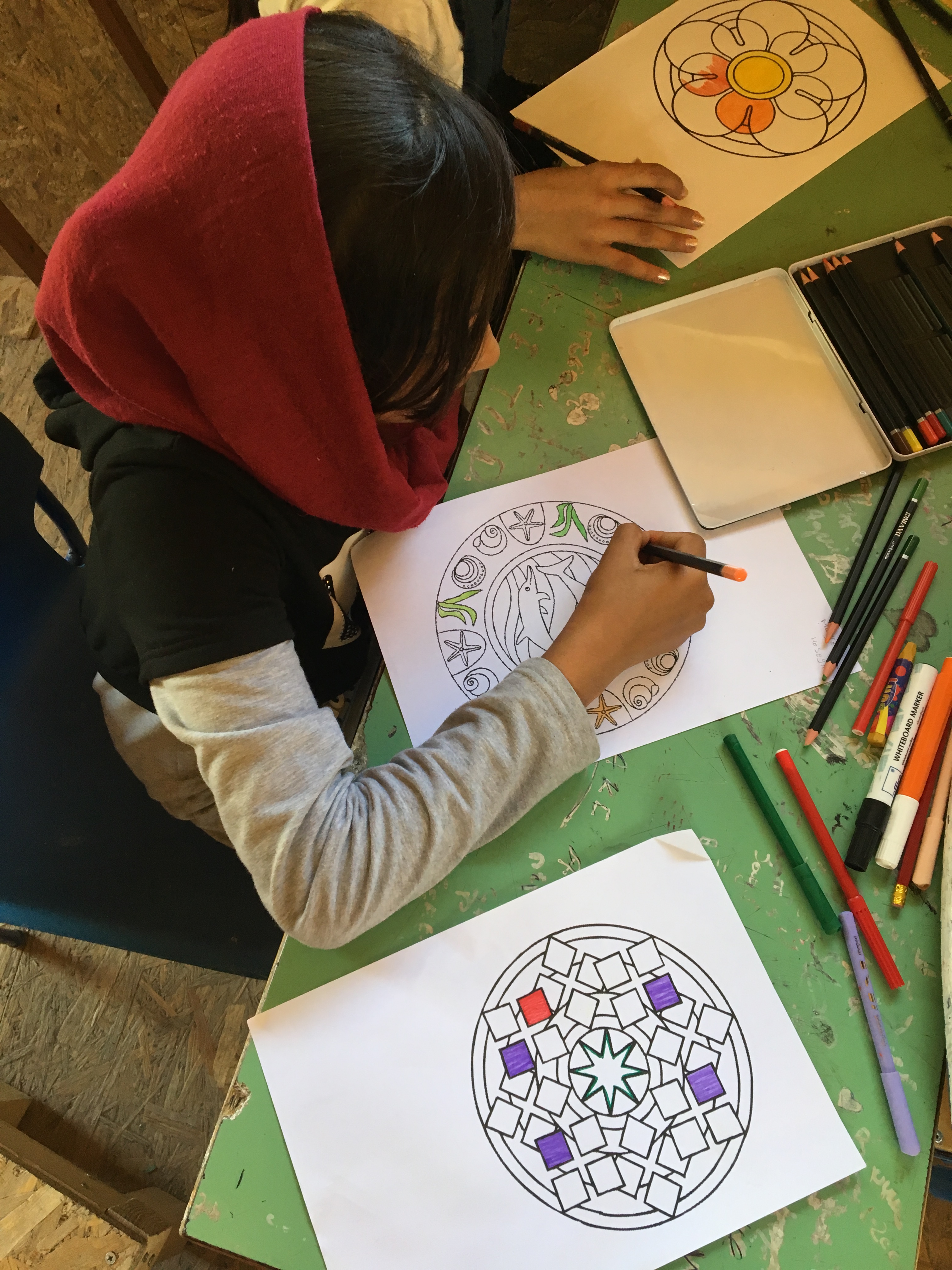
In IsraAID’s children’s art/play therapy programs, we’ve started going beyond just fun and games and introduced psychosocial support. Whether it’s having the kids draw their “happy place”, playing games that activate empathy, teaching techniques for calming down like breathing or meditation, or explaining how coloring mandalas can be a way of relaxing and easing stress, we’re trying to provide basic tools for the kids to be able to regulate their emotions and build up their resilience.
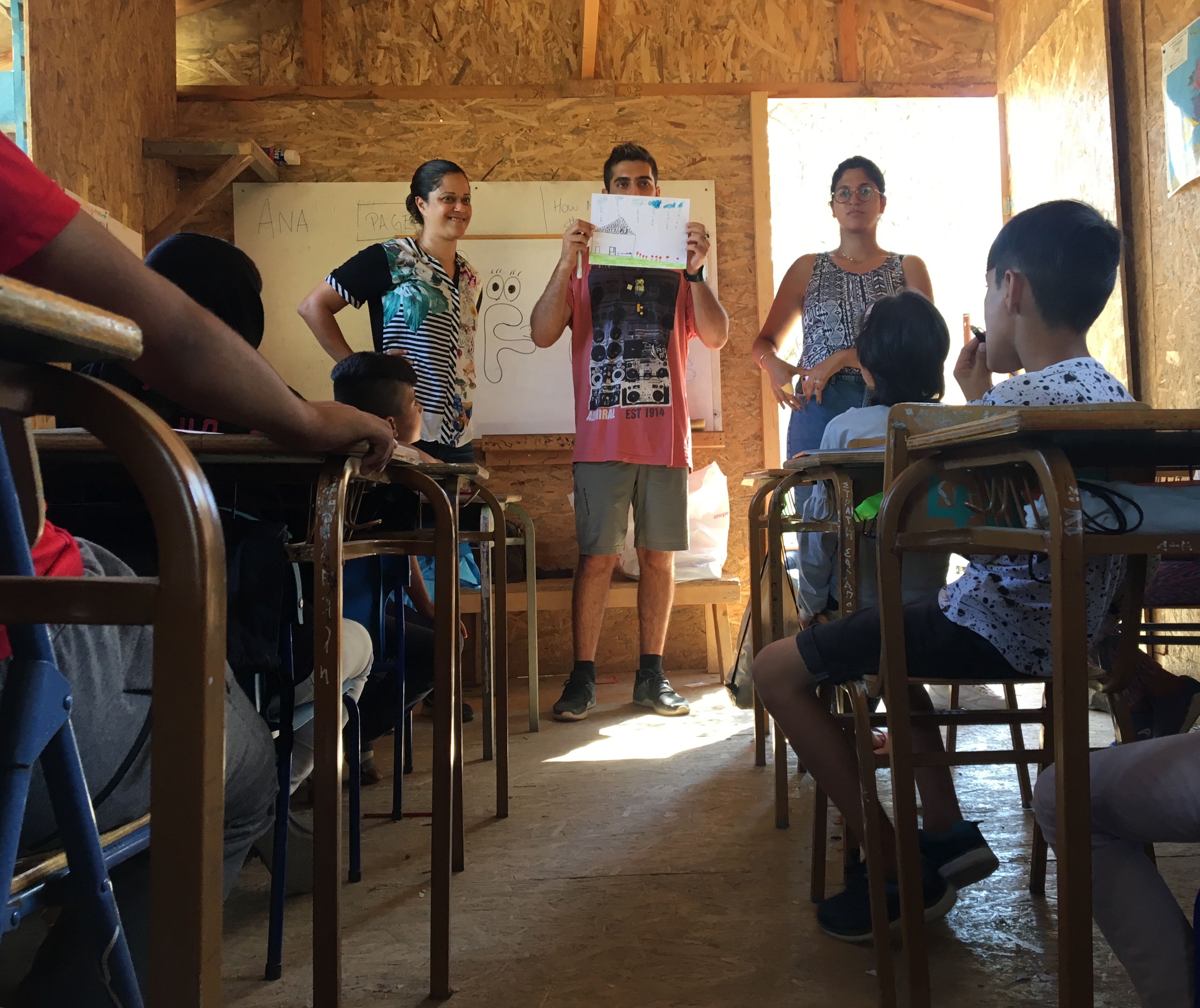
One of the moments during our program this past week that made us all take a pause was when we are establishing the classroom rules. We asked the children, as they sat on plywood benches in a semi-circle, what are some rules that you can think of that would make you feel safe in the classroom? We had expected suggestions along the lines of “no fighting”, “listen to the teacher”, etc. But the first student to raise his hand, one of the most rambunctious and mischievous of the bunch, said thoughtfully, “I don’t think we need any rules because I already feel safe in the classroom”. Another boy raised his hand to say that he also felt safe here because he had recently heard that a school had been bombed in Afghanistan. In other words, despite all the challenges, we had accomplished one of the many things that we had hoped; to create a safe space. Like our program director here in Lesvos put it, “Most of the time, these kids don’t feel safe. Living in Moria, that’s just the reality. So for two hours a week, we are giving them safety, we are giving them normalcy. We aren’t going to fix Moria. But we’re going to do our best to fix everything else.”
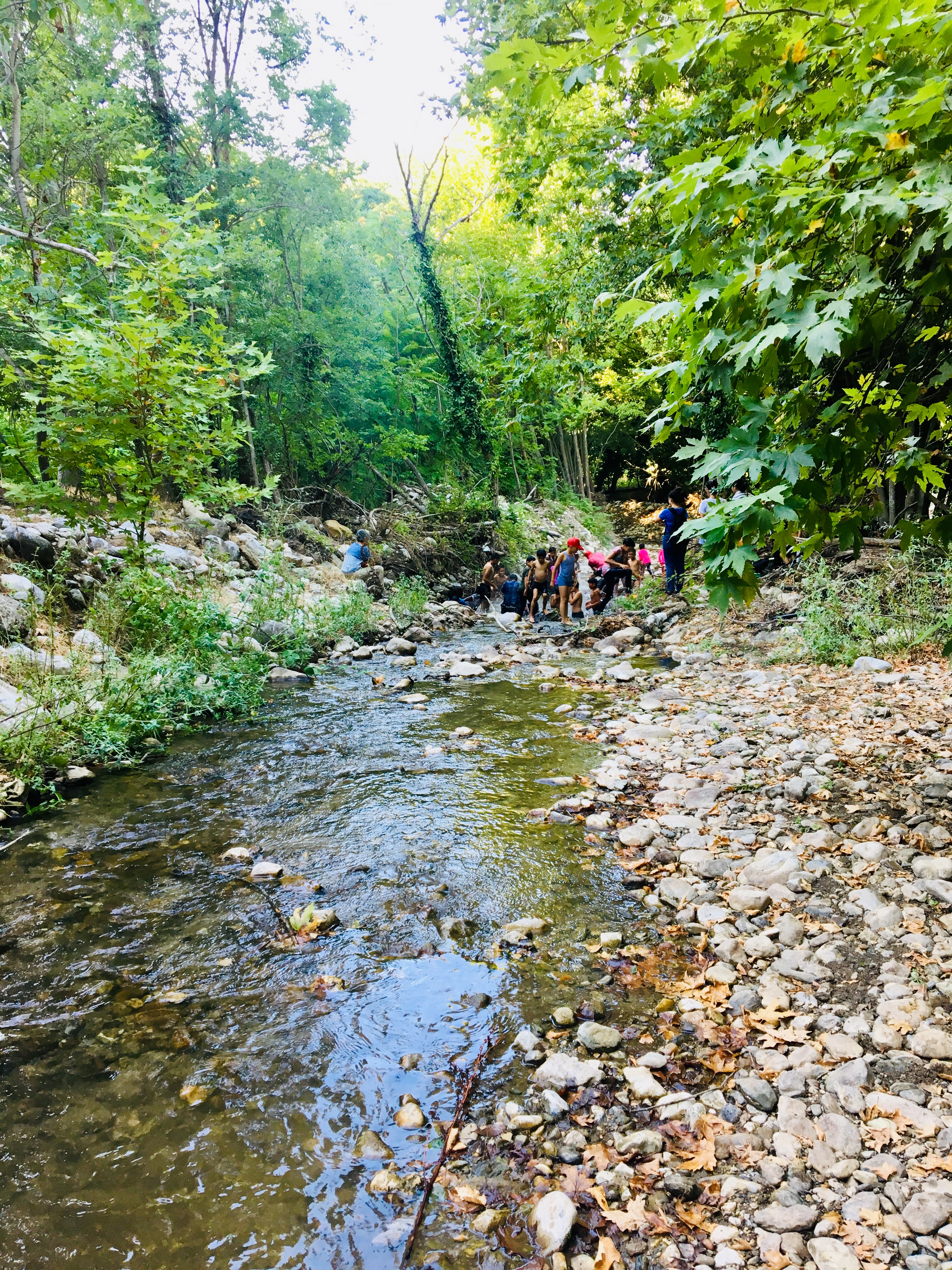
Children from the School of Peace cool down from their hike in a stream
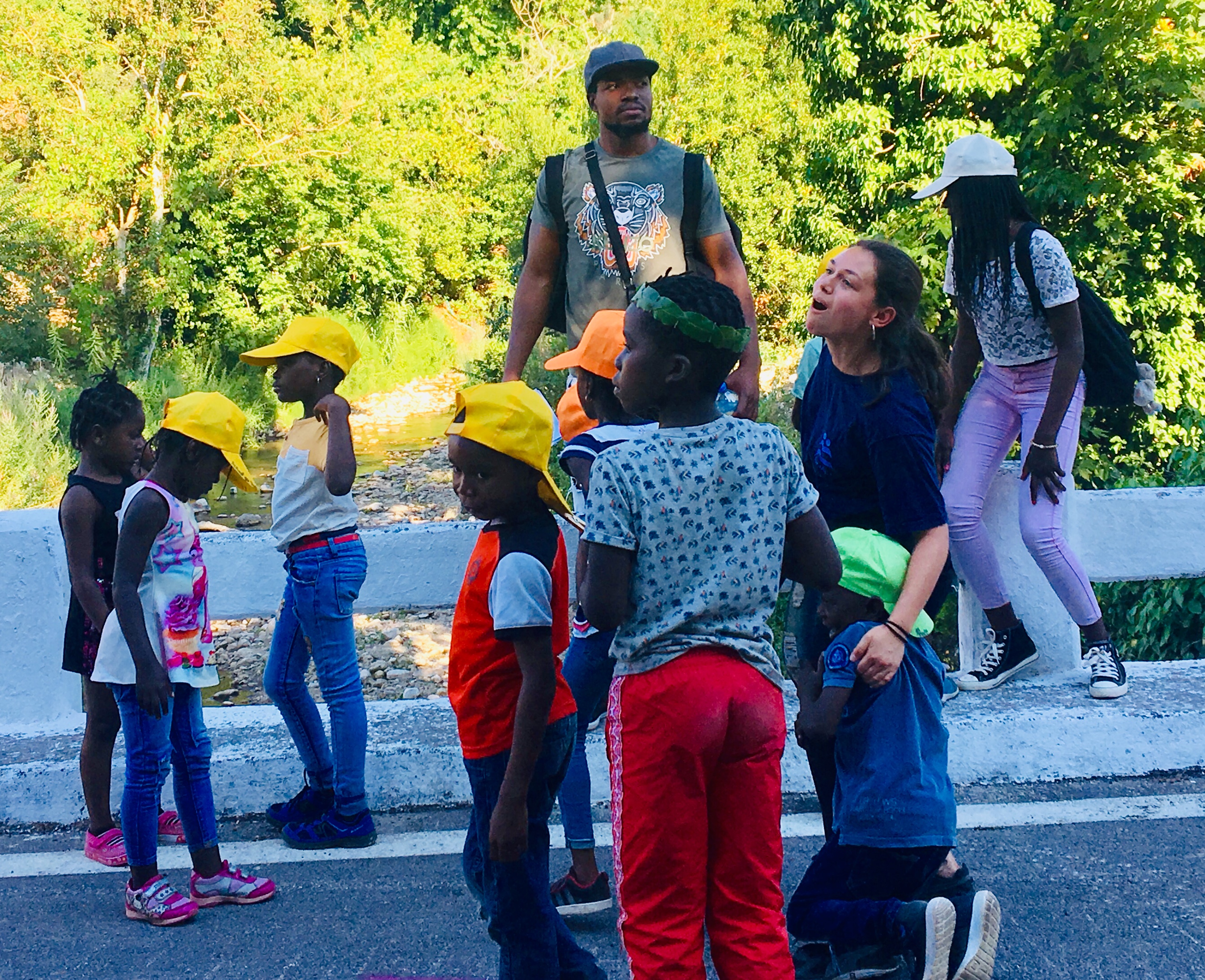
My face = what it’s like supervising this trip, in a nutshell
I was also fortunate enough to be a part of a couple other things this week: a field trip with the students of the School of Peace and an open air concert performed by musicians trained in the Moria and Karatape camps. There was one moment on the field trip that was completely surreal to me: after arriving in the mountains and going though an activity circuit that included yoga, tag, and storytelling, we hiked with the kids until we finally arrived at a stream. In a flurry of movement, suddenly there were tens of Syrian, Afghan, Iranian, Iraqi, Congolese and Angolan kids splashing, screaming, and jumping in the freezing water. It was insanely fun (+ absolutely exhausting) and I felt pretty lucky to be there with them.
Thanks to everyone who has followed my journey thus far. Things have been moving super quickly so here’s a brief post to bring you up to speed:
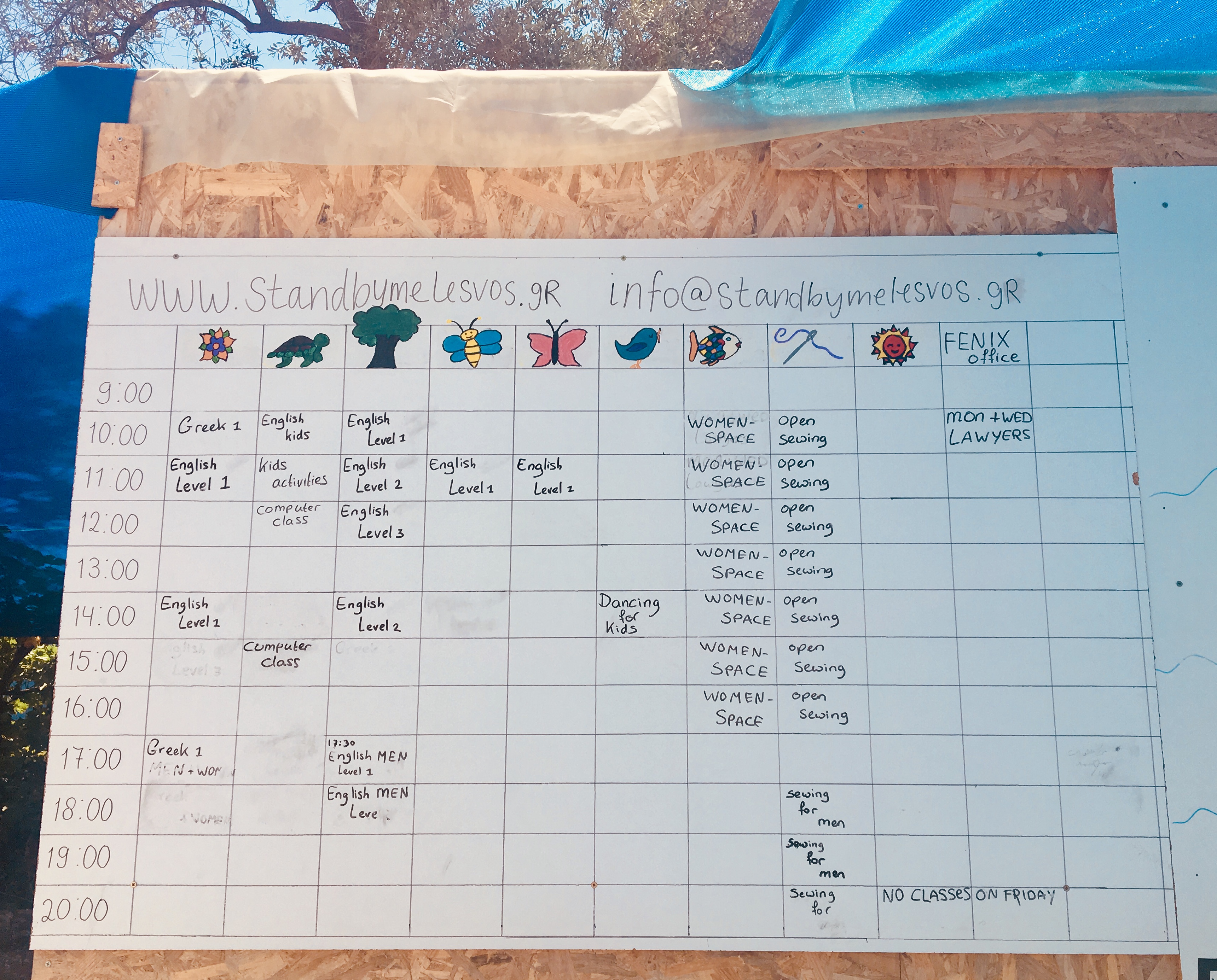
Class schedule for Stand By Me Lesvos
I’m teaching English lessons! I started to volunteer at an education initiative for refugees right outside of the Moria camp called Stand By Me Lesvos, which was founded by local Greek citizens. Since native English speakers are in short supply, I’ll be teaching advanced conversational English twice a week. I will be creating the lesson plans, curriculum, etc. Very excited to start next week!
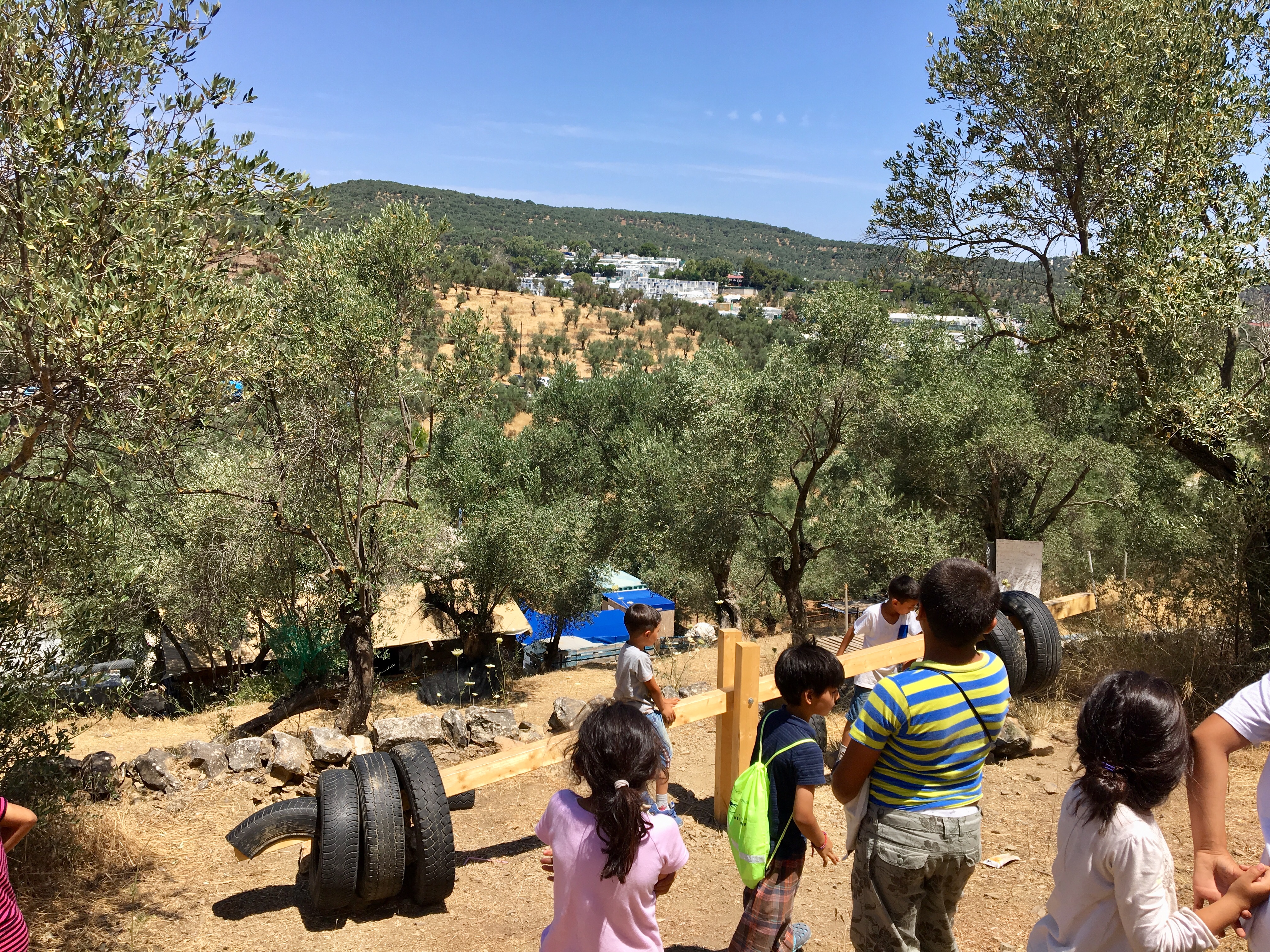
View from STBL playground; Moria refugee camp can be seen in the distance
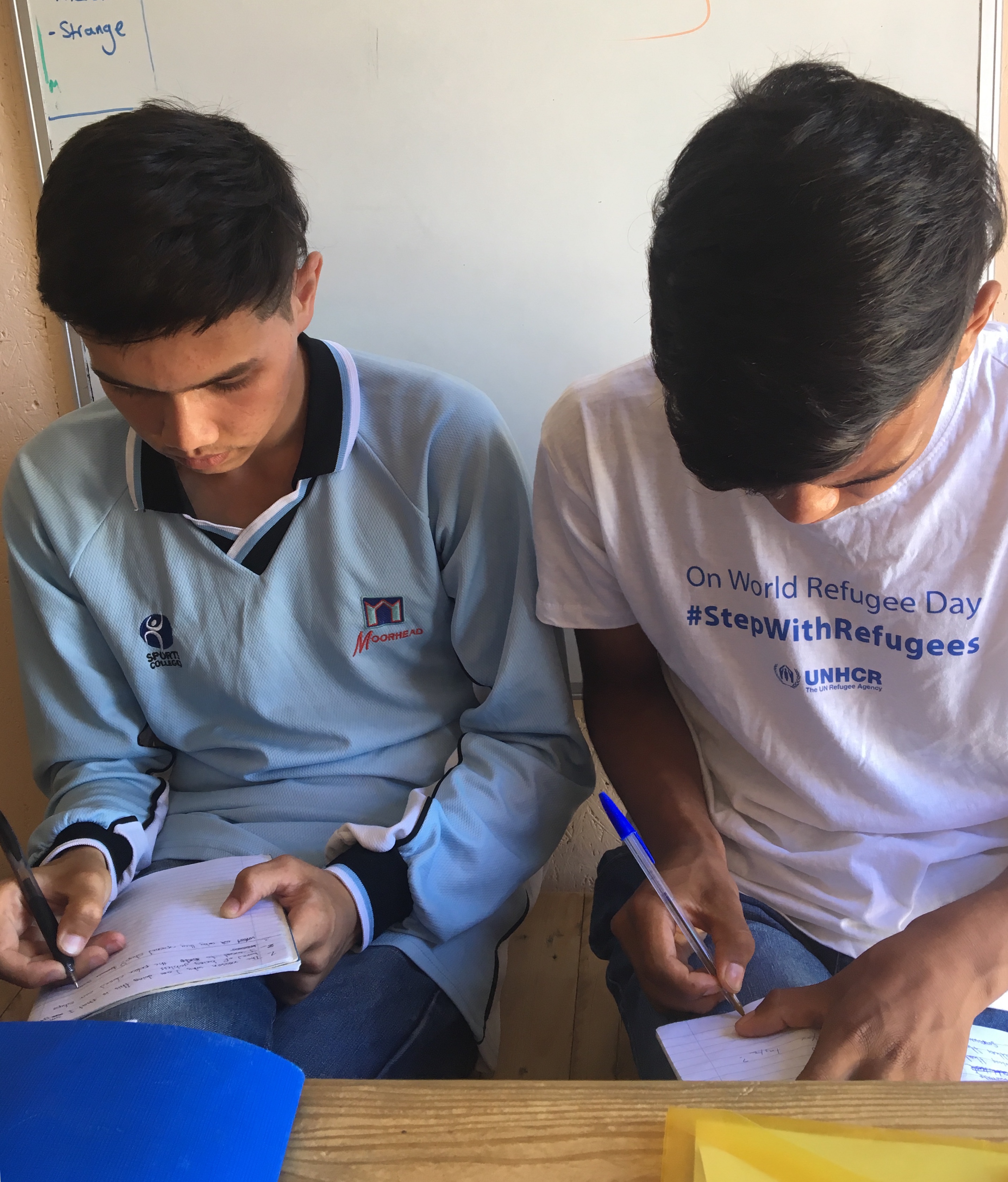
Two students drafting articles during our first class
Also, at a community center located right outside the School of Peace I will start to teach (*surprise*) writing lessons! Specifically, the class is focused on journalism so that students can be empowered to tell their stories and those of their community, to a global audience. And of course, learning advanced English writing skills can take anyone super far, whether it’s applying to jobs, getting into schools, etc. For me, whether it’s slam poetry or this very blog, writing has always been how I expressed myself. I hope that by the end of my class, my students will be able to do the same:) Oh, and ideally if everything goes according to plan (which it almost certainly won’t), we hope to publish a journal with the students’ work by the end of the month. This is also an initiative led by myself and another volunteer, so we’re excited to design the program and get started!
And finally, the past two weeks of careful planning have paid off and our IsraAID team had our first art/play therapy sessions! Was it complete chaos? Of course it was. Did we have to change the entire carefully-planned-program at the last minute? Of course we did. More will come in a future post…
If you’re reading this blog just to hear about my journey in Lesvos, please feel free to skip this post. However, if you’re really itching to learn about how a lot of humanitarian organizations get tripped up and can sometimes harm the very people they claim to help, what follows is a brief overview of some of the main ethical issues that humanitarian aid face:
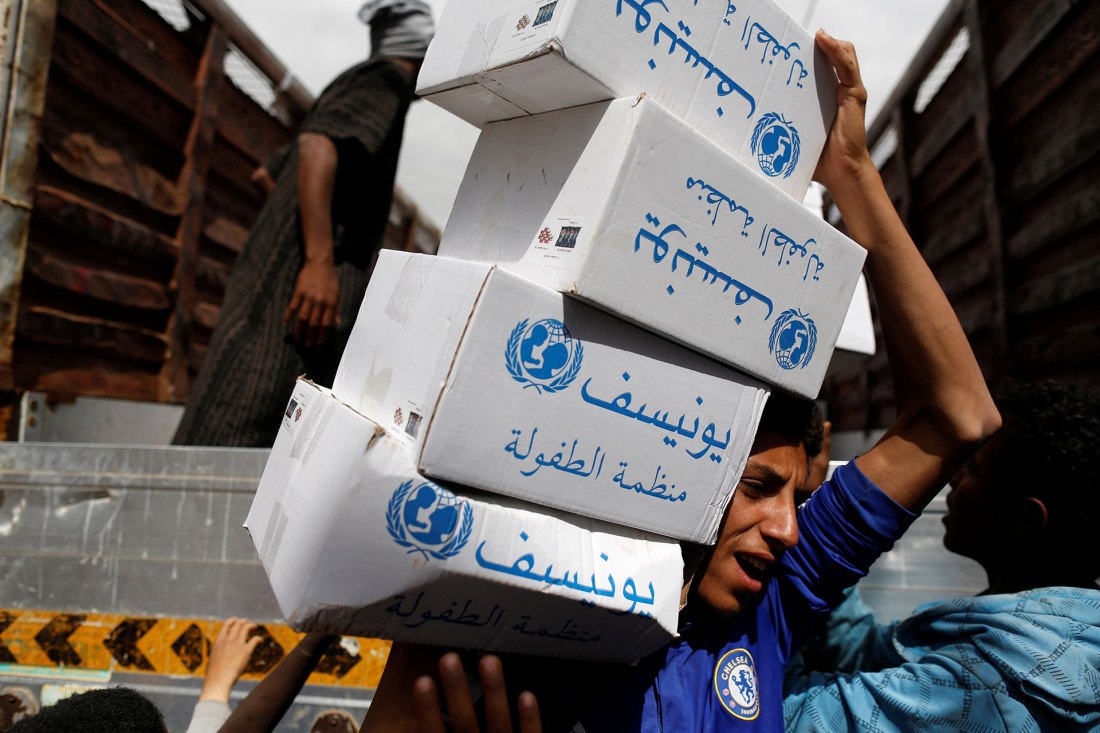
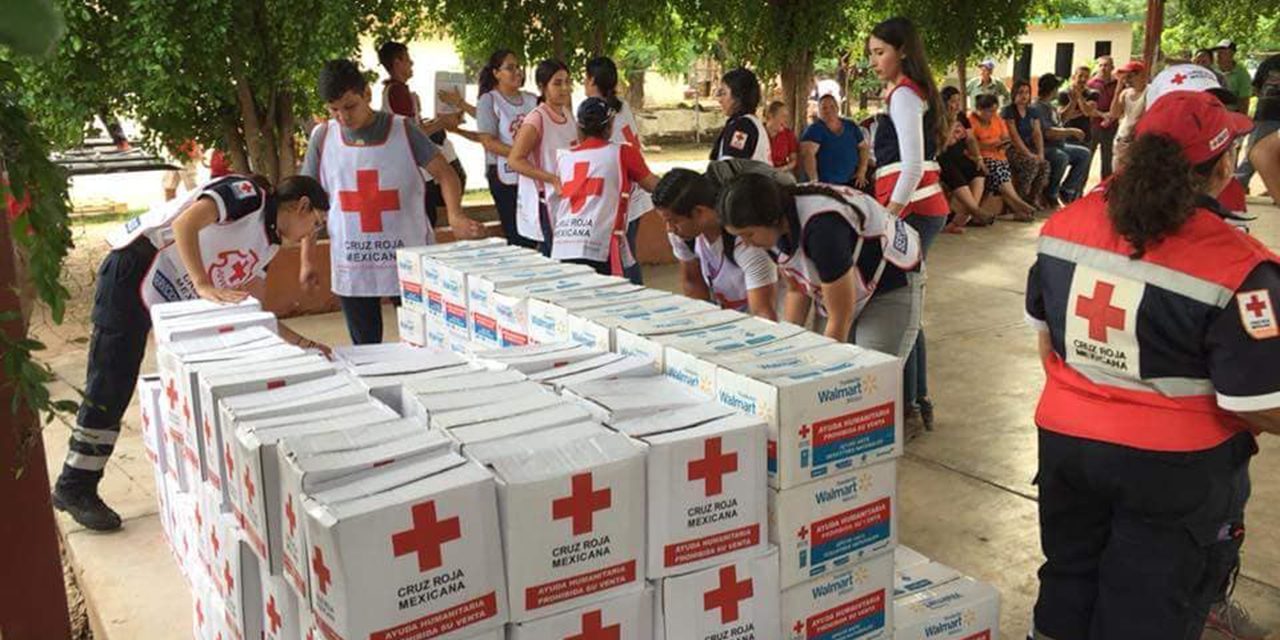
First, the issue of sustainability. A humanitarian crisis doesn’t end the moment TV cameras are packed up in pursuit of the next big story (in case you need reminding, the Syrian Civil War and the Gazan crisis haven’t gone anywhere). Recovery takes years, sometimes decades. Aid organizations that drop off cargos of food and leave weeks later do very little to help, apart from getting media coverage and ensuring that donors receive ample evidence of their “service”. In addition to not sticking around for the long haul, aid organizations do a disservice when they don’t take the time to equip the affected populations with the skills needed to take care of themselves. Without investing in the skills and empowerment of the affected populations, humanitarian aid organizations develop a cycle of helplessness in which the affected populations become dependent on aid. Which leads us to the second issue of…
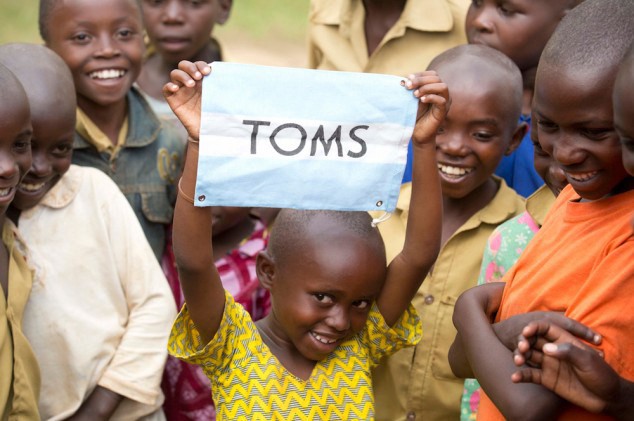
Dependency. Let’s take the example of a humanitarian campaign many of us have probably heard of, TOMS. TOMS is best known for their One-for-One policy, beginning with their shoes. For every pair of Toms shoes purchased, one is given to a child in need. Today, TOMS has donated over 70 million shoes (TOMS). However, as critics of the TOMS model have pointed out:
“The charitable act of donating a free pair of shoes serves as little more than a short-term fix in a system in need of long-term, multi-faceted economic development, health, sanitation, and education solutions“.
Cheryl Davenport
In other words, the act of simply giving resources reinforces dependency on donations. Moreover, these donations actually have the effect of distorting developing markets and undermining local businesses by creating an unsustainable aid-based economy. Tragically, free shoes ended up working against the long-term development goals of the community TOMS was trying to help (Davenport).
Finally, the issue of cultural-specificity. There is no one-size-fits-all solution for all the humanitarian crises in the world. For example, the same hygiene program in Mozambique may not work in Lampedusa for countless reasons, such as differences in language, culture, geography, religion, demographics, etc. In other words, context is everything. You need to understand the population you’re working with to ensure that the humanitarian relief is the right fit, and that it isn’t simply being imposed.
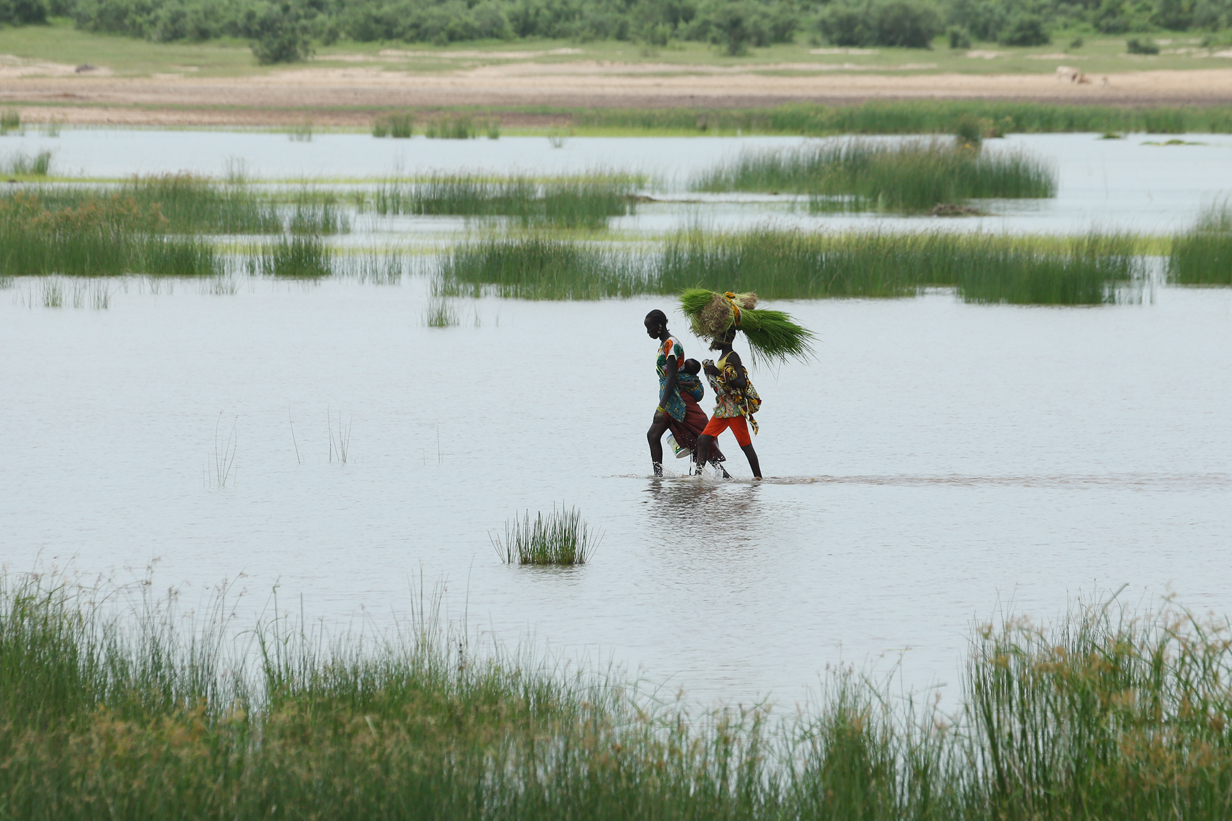
Let’s take a look at a development project implemented in the Gambian wetlands that failed to understand the local gender dynamics. In the existing gendered division of labor in Gambia, men cultivated highland peanut plots while women cultivated lowland rice plots, or wetlands. Similarly, in the gendered system of property rights, women retained the independent rights to rice plots, while the peanut plots were controlled by the men. Motivated by the desire to achieve food security, the Gambian government encouraged rice cultivation (a more stable crop) by improving wetland access and through developing better rice seeds. As a result of the wetland development, male household heads and village elites responded by calling into question women’s long-standing rights on the wetlands. The women fought back, demanding wages and alternative plot of land. This lead to conflict and effectively crippled the project (Carney, 320-322). In conclusion, projects that don’t take into consideration important population-specific factors such as gender relations can risk failing on their own terms.
Now this again is FAR from an exhaustive examination of the ethics of humanitarian action. There are other issue such as that of refugee camps, restrictions over freedom of movement, and political disempowerment. But there are also other ways that aid organizations can address these problems, like safeguarding and protection mainstreaming. This is a super interesting area of study that I (unfortunately) can only scratch the surface of here, but which I plan to study in pursuit of my Master’s degree.
The organization I will be working for this summer, IsraAID, has really invested in developing projects that are ethically sound. For example, after Hurricane Maria hit Puerto Rico in 2017, IsraAID sent a team there to work together with local shelters, authorities, civil society organizations, Jewish communities, and psychologist associations, to tap into resources already present within the community. Moreover, they’re still there today, building the foundations to ensure that the affected populations are equipped with the resources and training to make a full recovery.
I’m really looking forward to seeing for myself how IsraAID’s model unfolds in Greece in the next two weeks, and being able to get a sense of what the outcome of their (and hopefully some of my own) work will be. Counting down the days…
Sources:
Carney, J.A.. (2004). Gender Conflict in Gambian Wetlands. Liberation Ecologies: Environment, Development, Social Movements. 316-336.
Davenport, Cheryl. “The Broken ‘Buy-One, Give-One’ Model: 3 Ways to Save Toms Shoes.” Co.Exist. Fast Company, n.d. Web.


 Inside IsraAID Greece