exit strategy

That’s right. It’s almost time for me to painstakingly remove myself from all the projects and I’ve invested in and the people whose lives I have been a part of, even if for a second. I feel like an awkward cephalopod that’s spent all its energy wrapping its arms around something only to be pulled away, inch by inch. If the imagery sounds jarring, I promise you the feeling is even worse.
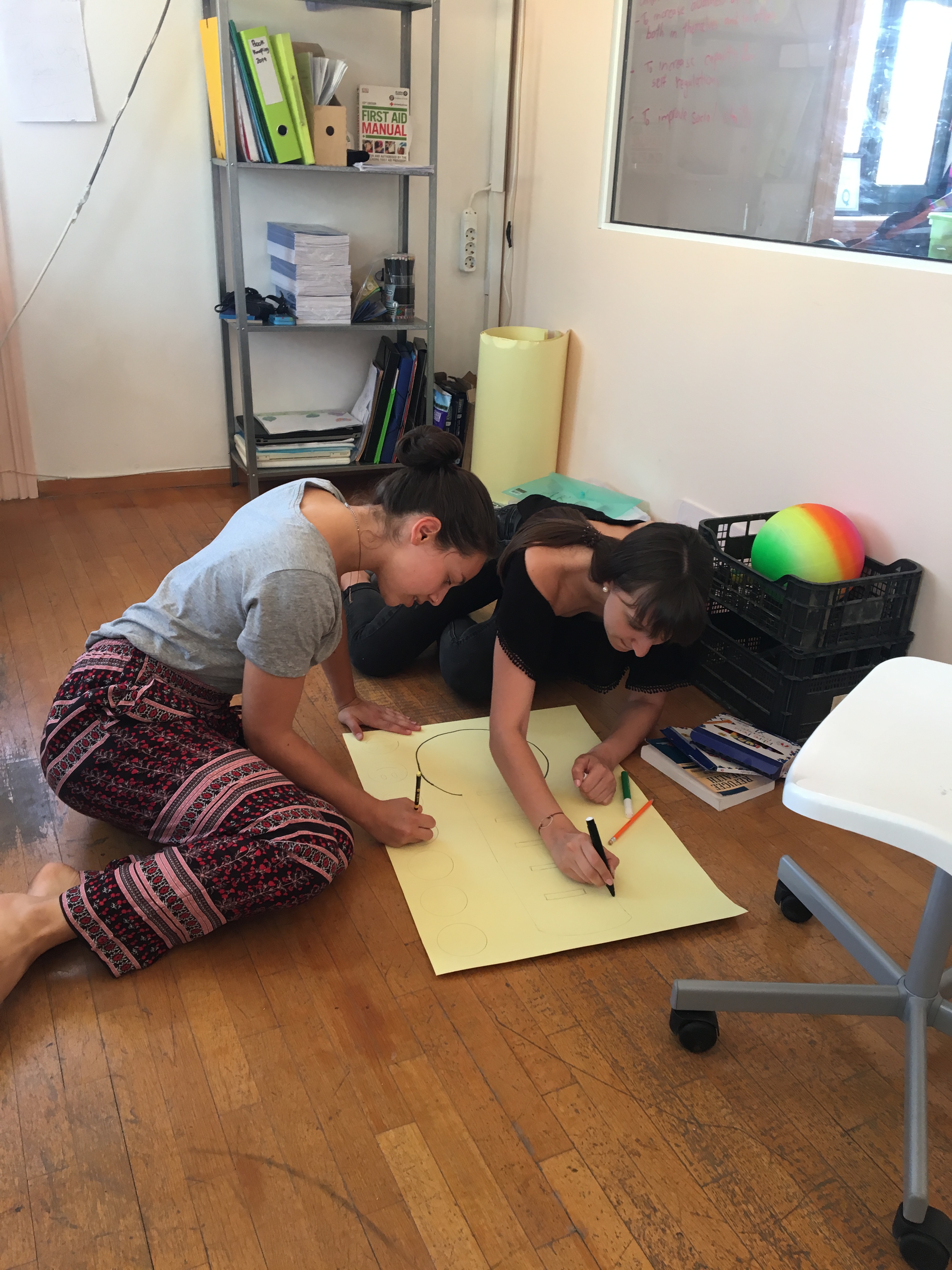
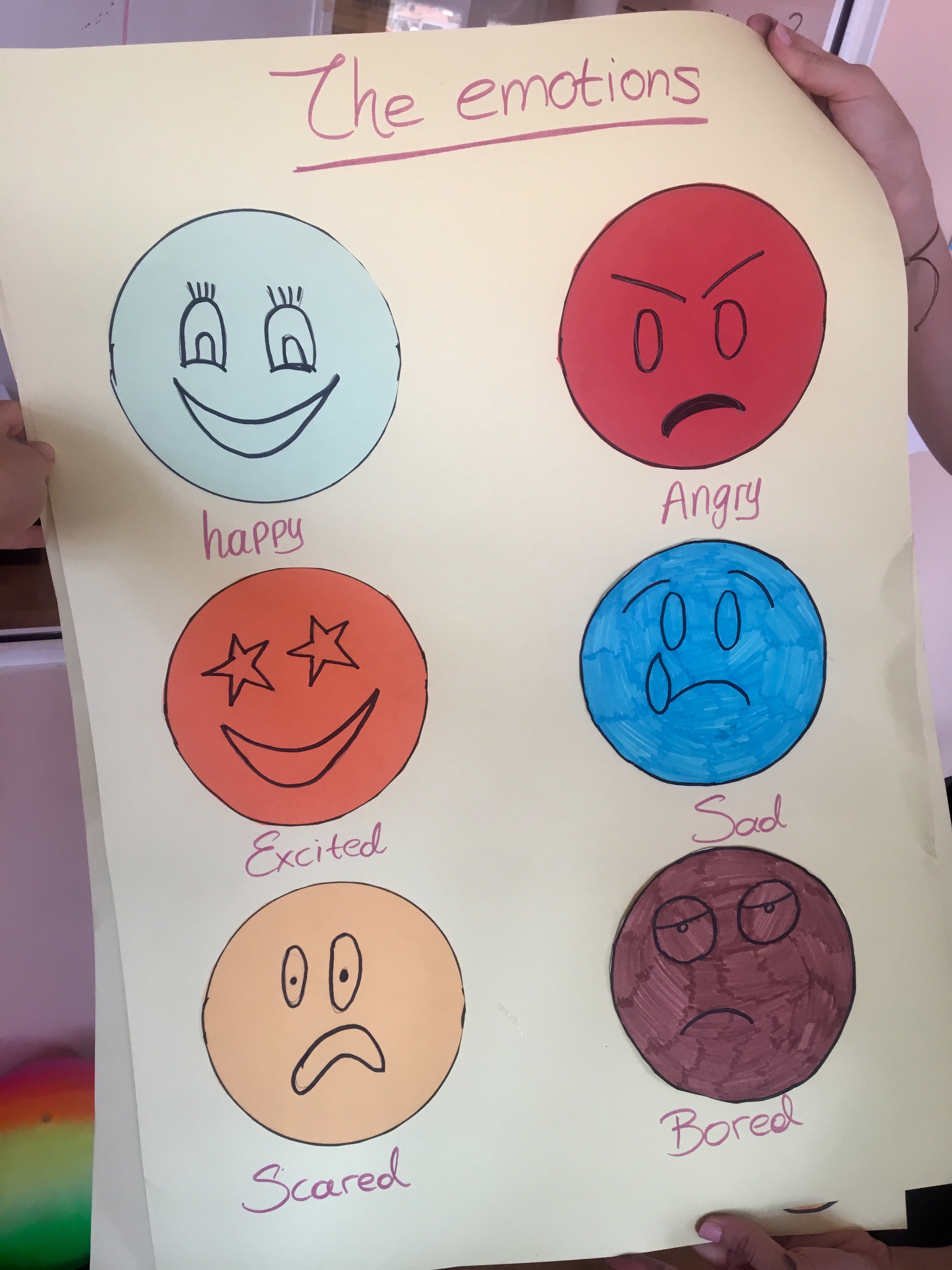
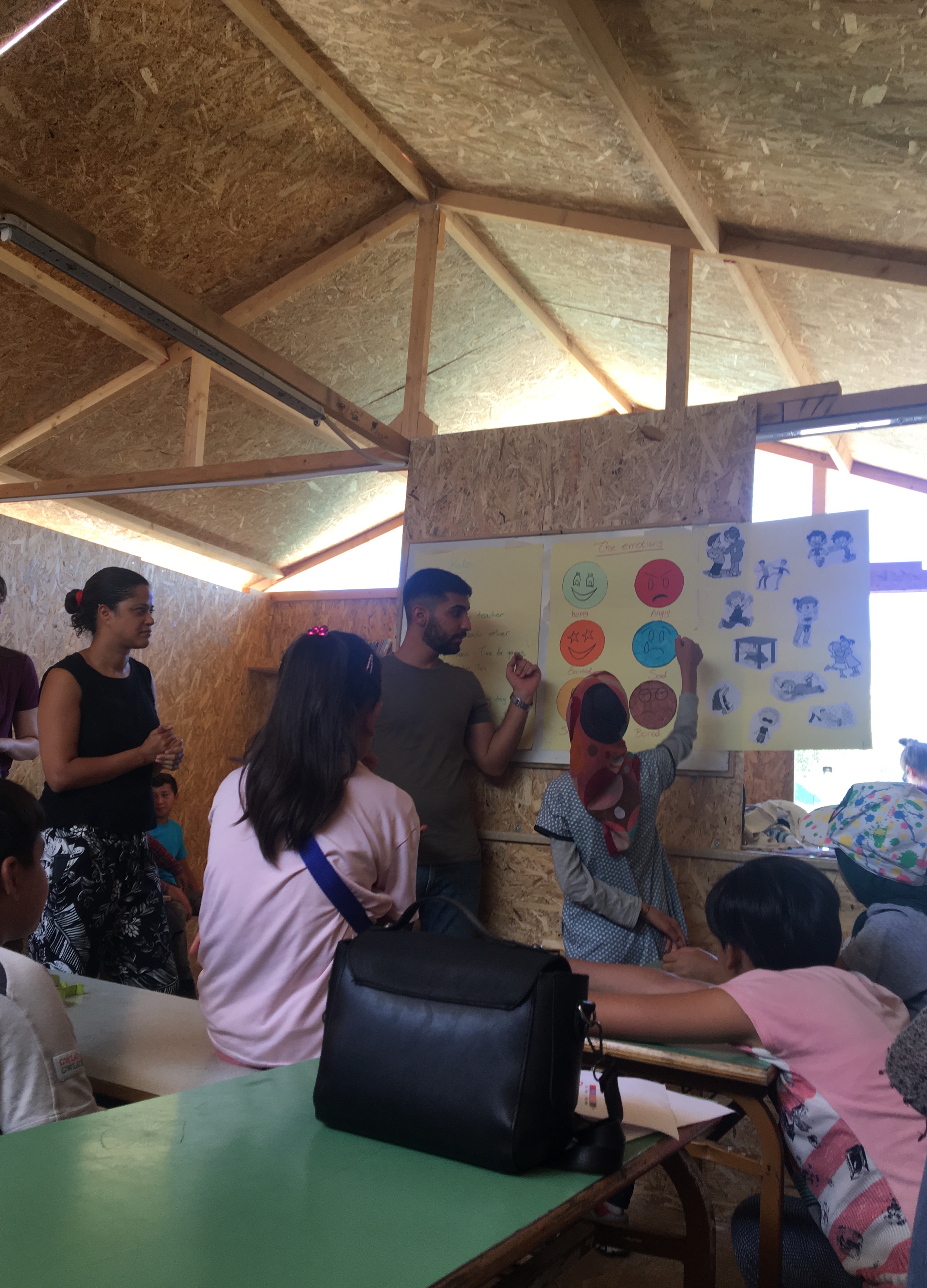
Why is this such a difficult process? Well, let’s start with the kids. The art and play therapy sessions have evolved in some really amazing ways. From connecting emotions and thoughts to actions, to exploring psychosomatic symptoms, its been amazing to see these kids open up and explore how they feel. And of course inevitably, the more time I’ve spent here the more attached I’ve become to them and their laughter, hugs, and contagious energy. But now I have to focus my attention on my exit strategy, and it’s a fine balance: I need to find a way to leave without simply vanishing from their lives (as so many have done before), but at the same time, if I make a big deal out of my leaving, I’m also emphasizing the fact that they are being left behind, that they—unlike myself—cannot leave the island. Like everything we do here, it’s vital that all of our actions are done in the interests of the kids (or the beneficiaries) and not ourselves, so even just the act of saying goodbye takes a great deal of thought and preparation.
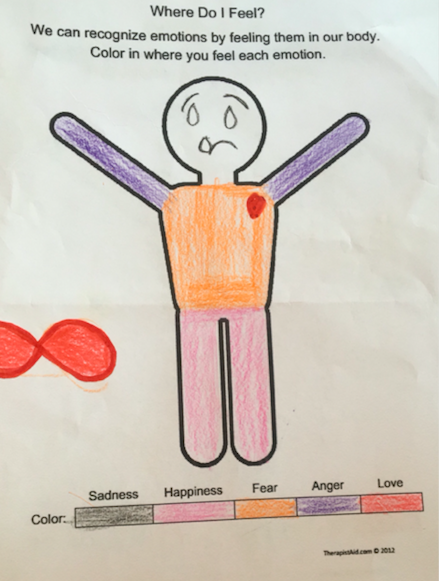
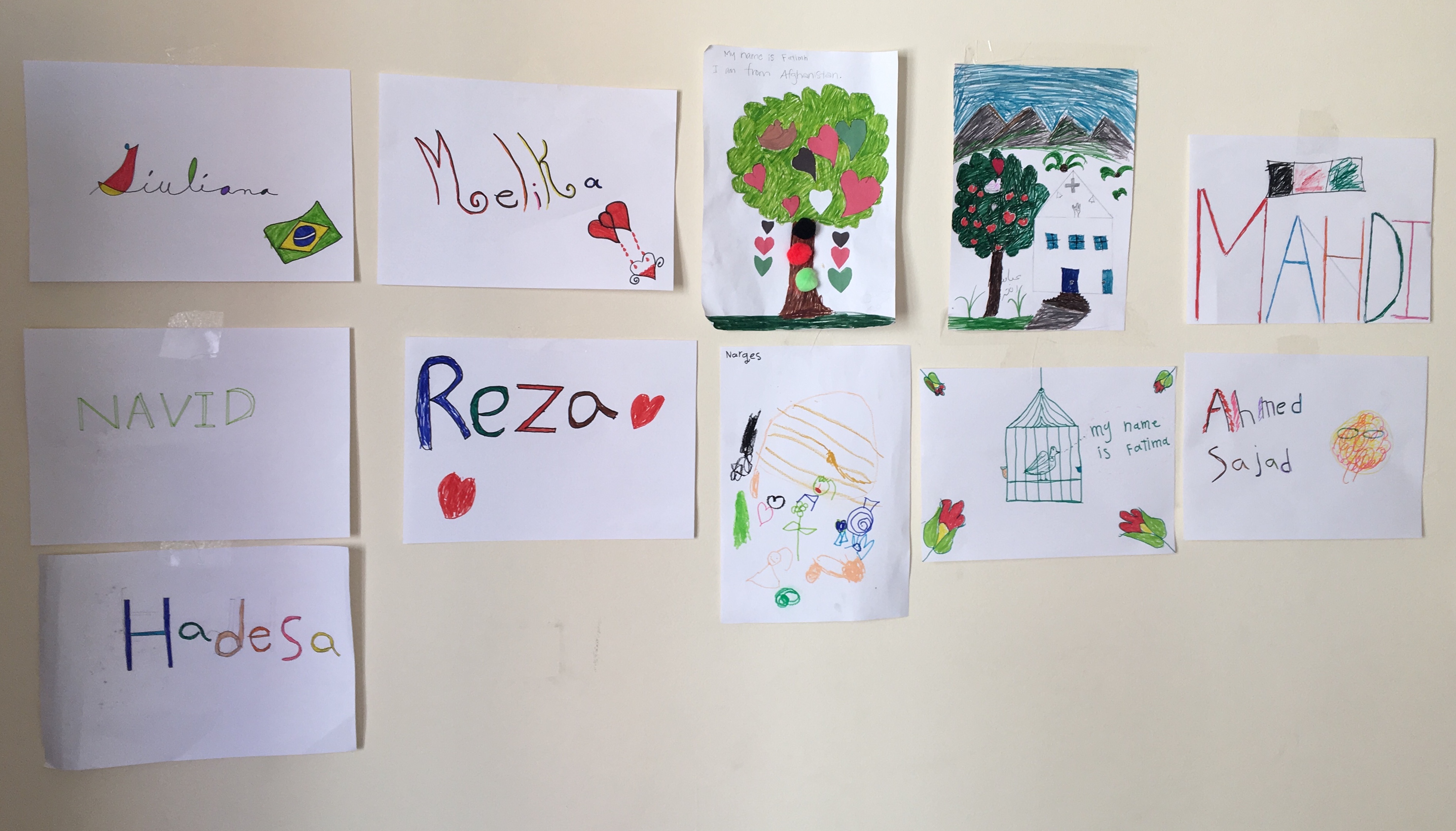
Children learn about psychosomatic symptoms through a drawing exercise

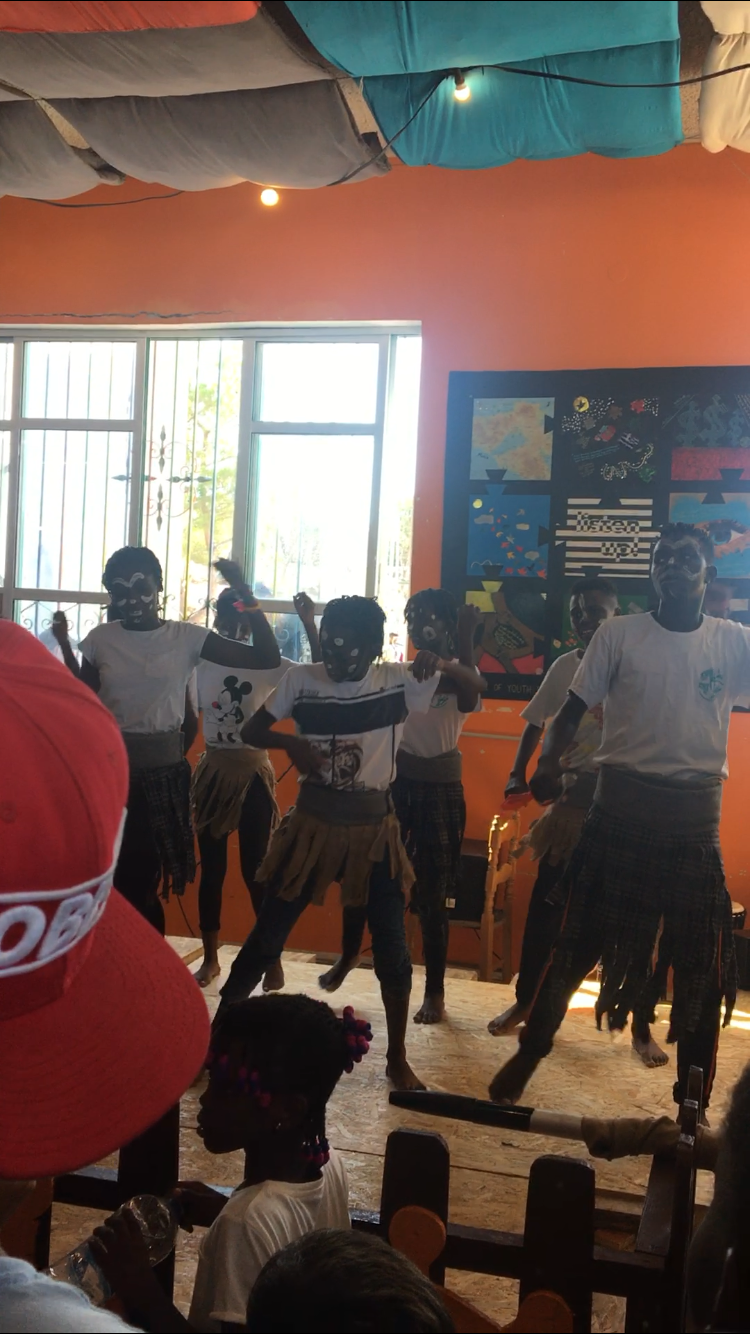
It’s a challenge that looms closer each day, and I’m not exactly sure how I’m going to face it. One thing that’s for sure is that these kids continue to amaze me. Just last week was African Cultures Day at the School of Peace and I got to see my students performing a Congolese dance. I sent a video of it to a friend who replied, “refugee camps on the news are always so depressing… It’s amazing for me to see how happy everybody looks.” And I realized that it was this inside perspective that I have, that one can’t get from the news—the insight into the smiles, courage and strength that these children constantly show me—that I might miss the most. But that’s also something that I will never have to say goodbye to.
the kids are alright

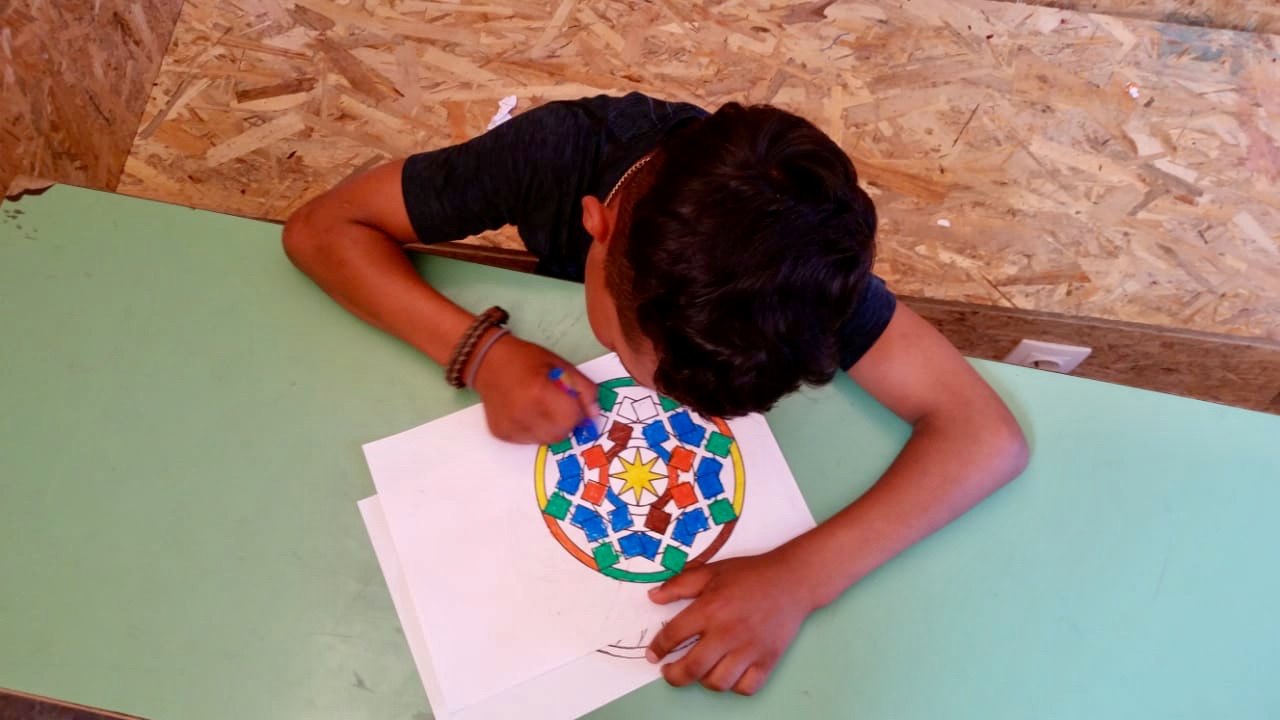
“My friend, my friend!” The sound of children calling for my attention from all corners of the room causes my head to spin. Sound ricochets off the walls and the classroom is a flurry of color and movement; colored markers and pastels get passed around as the children finally begin to settle down and concentrate on coloring their mandalas. 

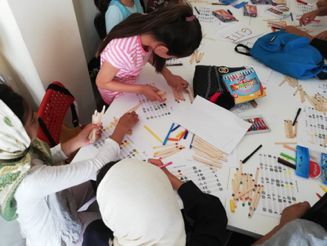
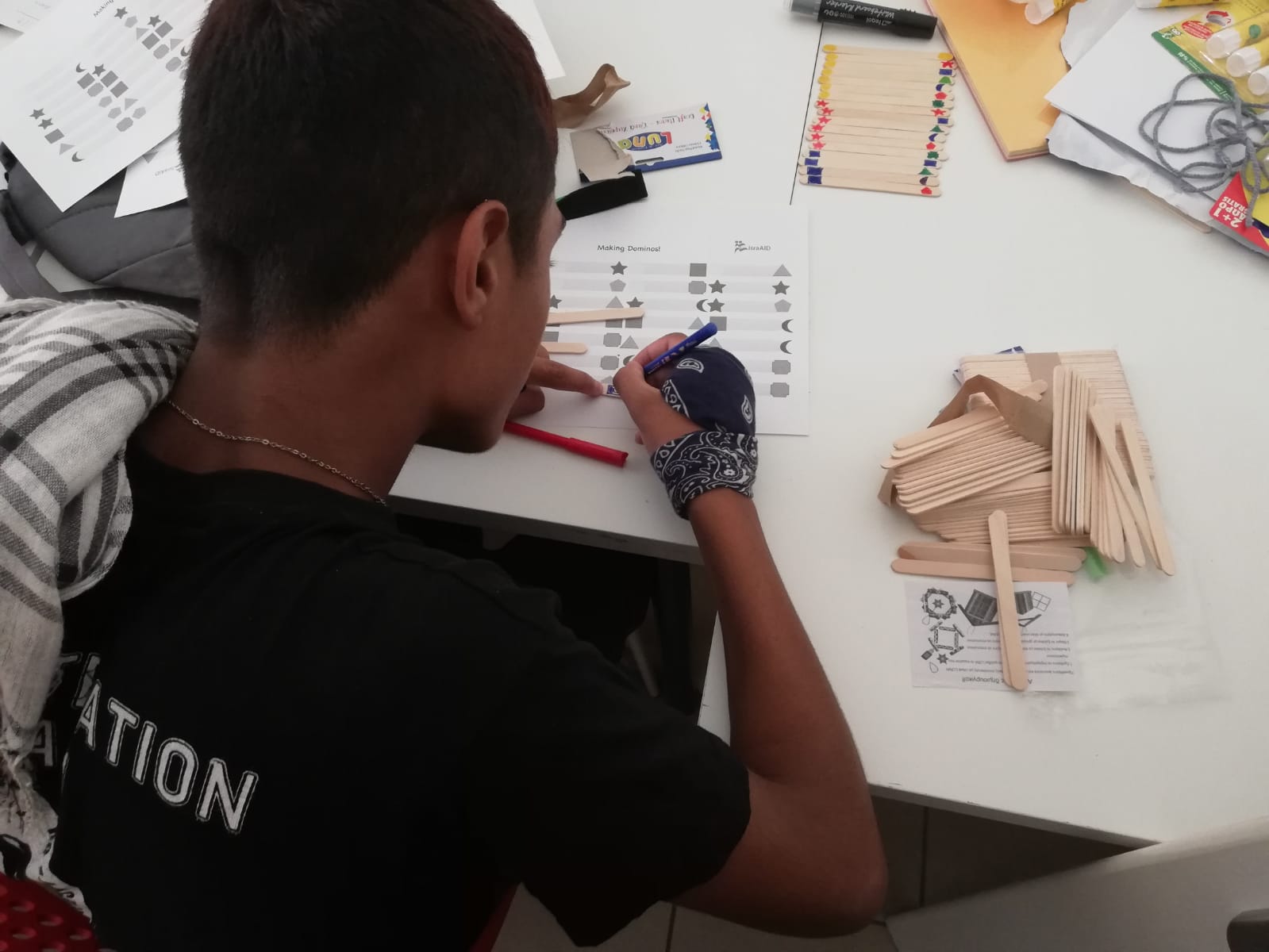
The past two weeks of careful planning have finally paid off. Between finding games like beach-sand and arts and crafts like popsicle-stick-dominos, we had impeccably planned three 1.5-hour art/play-therapy sessions of pure fun and learning at two different refugee schools. Was it complete chaos? Absolutely. Did we have to change our careful planning at the last minute? But of course. Did the kids have fun? You better believe it. 

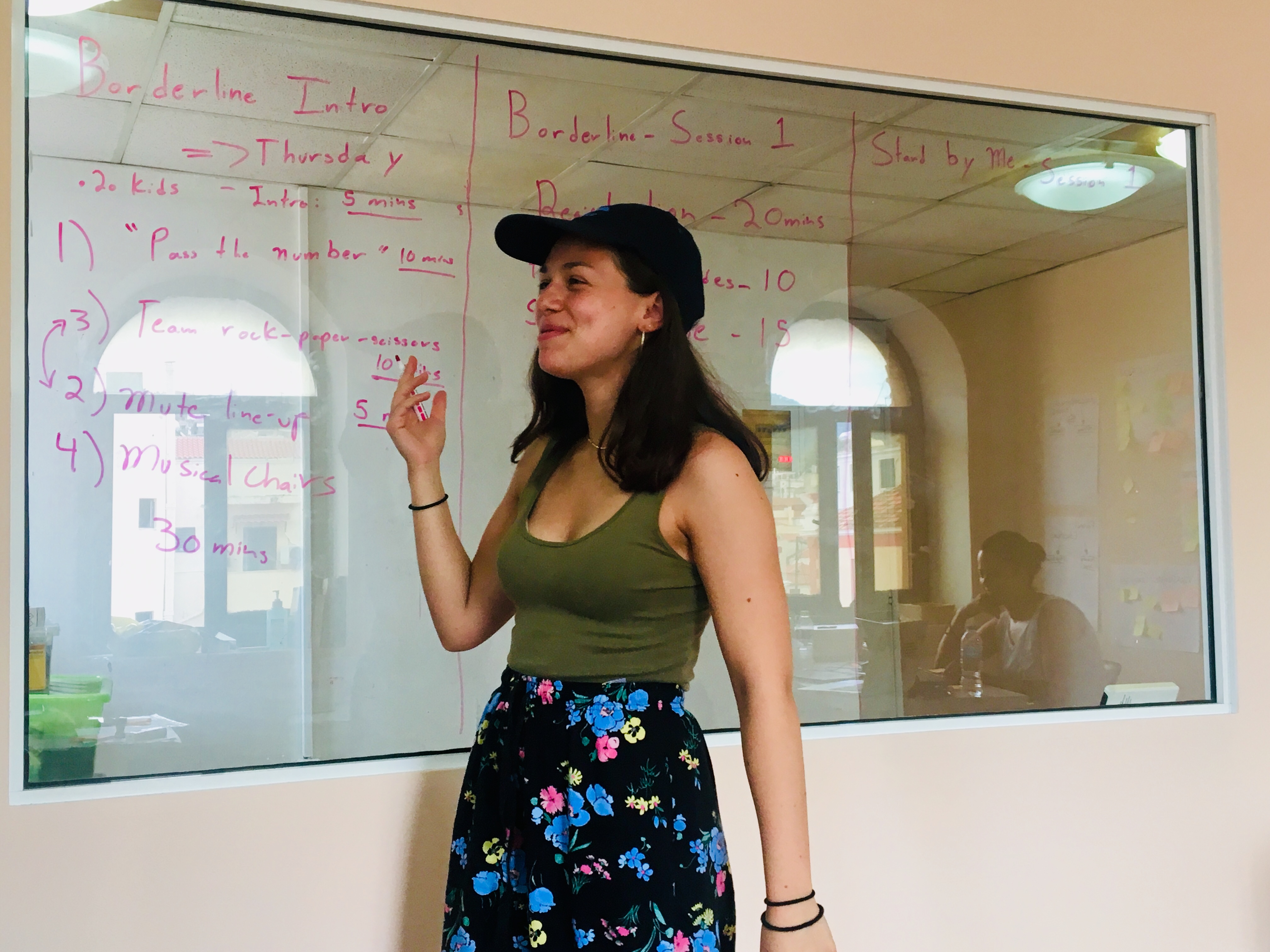
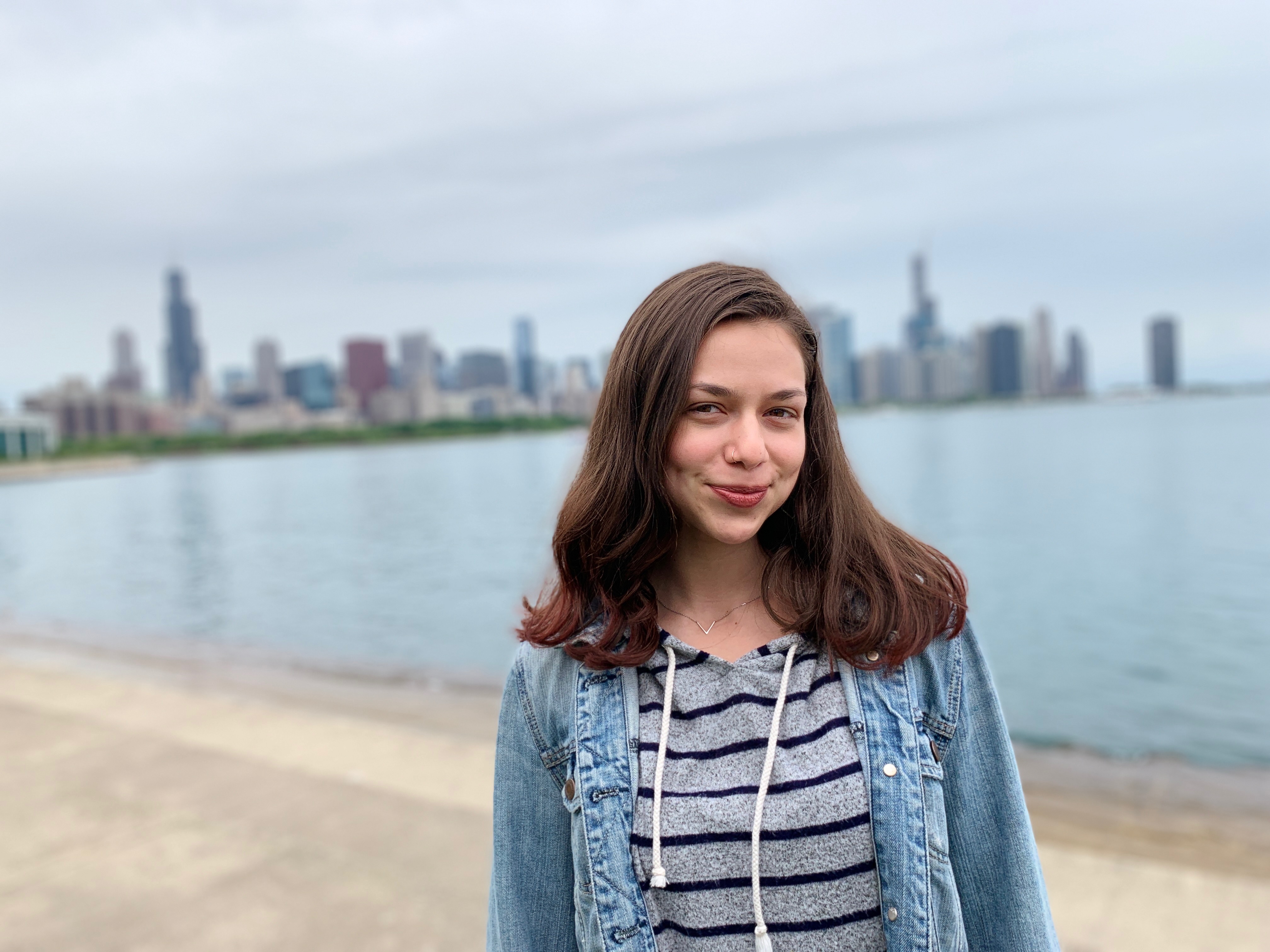
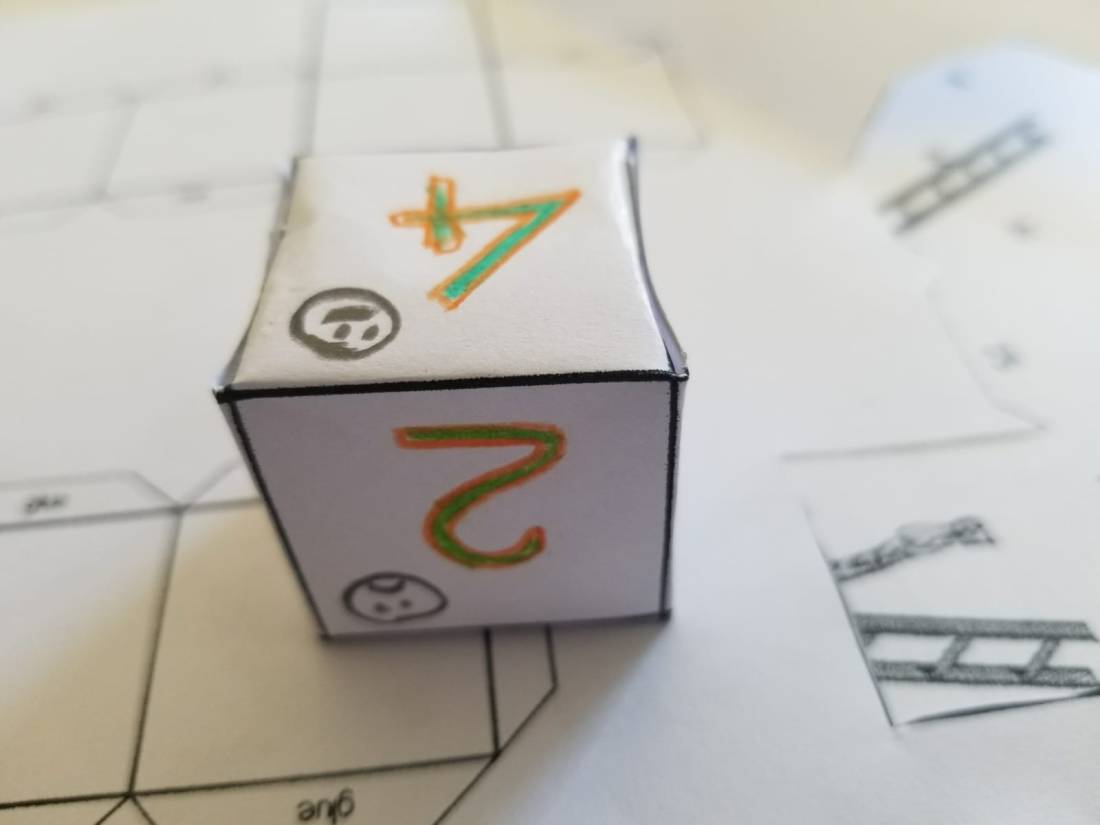
Me at IsraAID Lesvos HQ building the children’s sessions

The truth is, there are just so many unexpected elements when working in this kind of environment. From the difficulty of getting accurate translations (we were working with predominantly Farsi-speaking kids) to the fact that children with trauma will often develop ADHD, to the unexpected drop-ins (we had anticipated 20 kids and around 50 showed up), there were tons of adjustments that had to be made. But after going back to the drawing board and redesigning certain aspects of our sessions, it was like a light switch had been flipped; kids started following directions, the craziness (and volume) level went down, we got through more activities and you could tell that the parents who peeked into the classroom were enjoying watching their kids play. Oh, and the experience of playing with the kids—seeing them laugh and helping them to create art work and games that they could take home—made everything worth it every time. 

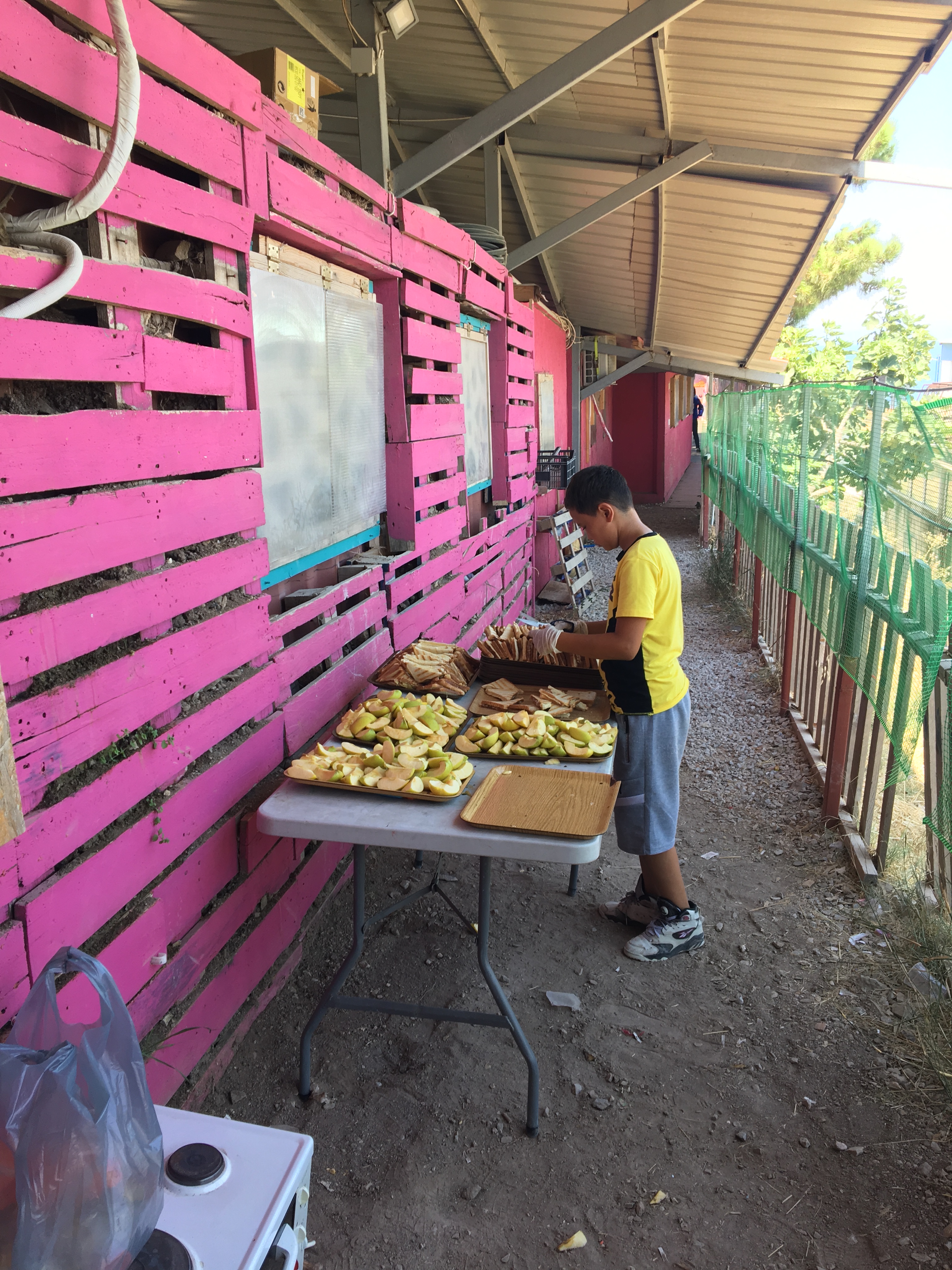
Students help to prepare the noon snack of apples and grilled cheese

I also continue to volunteer with the Congolese kids at the School of Peace. The teacher who I work most closely with shared with me how he had studied and gotten his degree in electrical engineering in the Congo. Two years ago, he decided to search for a safe home and a stable job in Europe, leaving his wife and children behind with the hopes of sending for them later. After living in Turkey for four months without finding work and feeling generally ostracized, he decided that it was time to move on to Europe and made the decision of crossing the sea. But like many before him, he got stuck awaiting asylum processing in the Moria refugee camp. However, like he shared with our class during a story-telling activity, “When I got here, I saw that I could do good and be useful by working with children in the school, and if I hadn’t, then I wouldn’t have met all of you wonderful kids.”

Between the laughter, the piggyback rides and the breaking up of arguments, it’s incredibly easy to forget why this school exists in the first place: the refugee crisis, and the fact that most of these kids return to the Moria camp at night. And yet unlike other kids, these are markedly different; they talk nonchalantly about travel by dinghy, i.e. the small lifeboat that makes the dangerous crossing between Turkey and Greece. They laugh about the “ferociousness” of the flies that bite in the Moria refugee camp. And despite all that, nothing captures their attention each week like the possibility of receiving the “student of the week” badge, accompanied by a small plastic (often Disney-inspired) toy that they get to take home. Despite their hardships, these kids still get to be kids. And that my friends, is what resilience looks like.

some quick updates!

Hi all!

Thanks to everyone who has followed my journey thus far. Things have been moving super quickly so here’s a brief post to bring you up to speed:

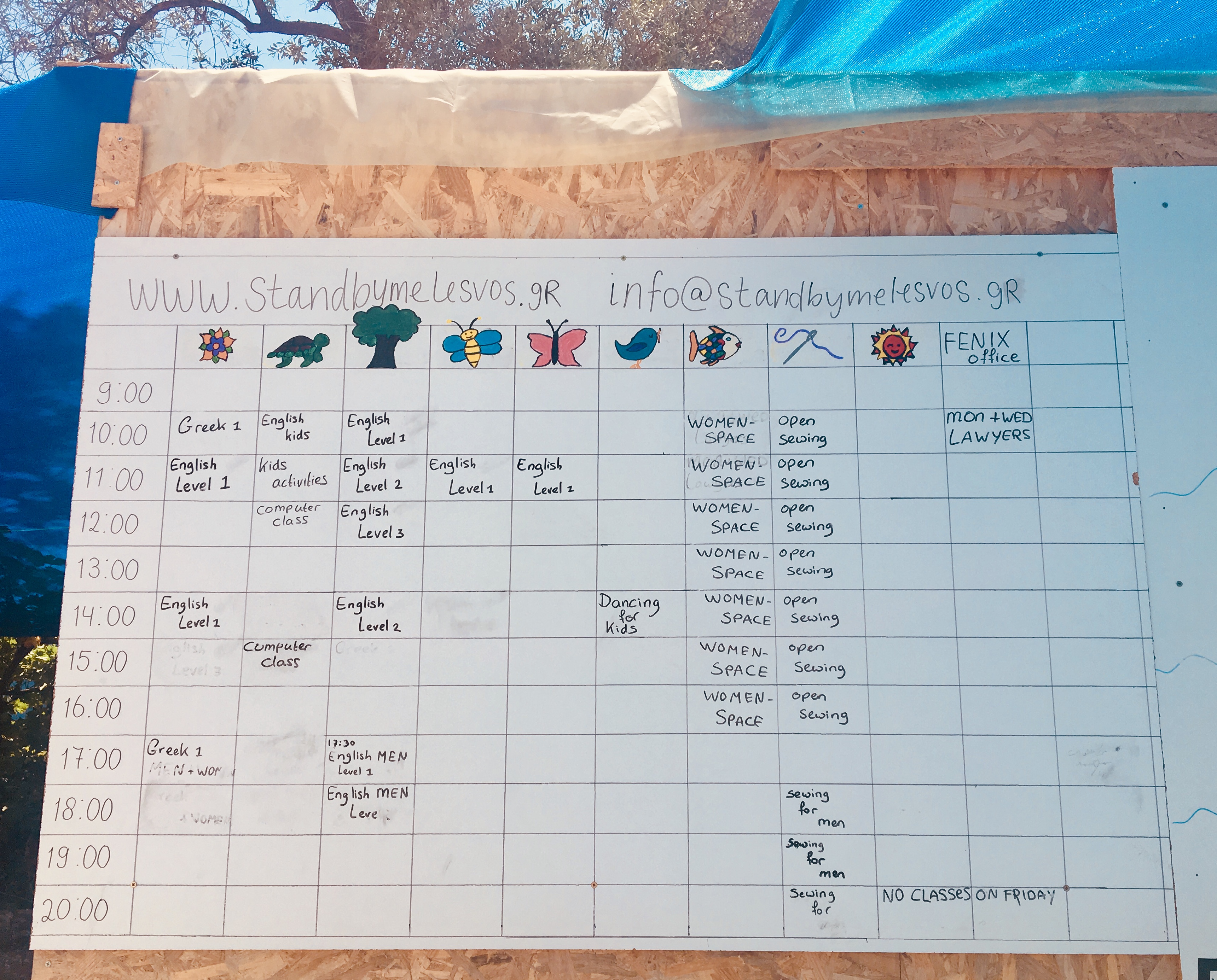
Class schedule for Stand By Me Lesvos

I’m teaching English lessons! I started to volunteer at an education initiative for refugees right outside of the Moria camp called Stand By Me Lesvos, which was founded by local Greek citizens. Since native English speakers are in short supply, I’ll be teaching advanced conversational English twice a week. I will be creating the lesson plans, curriculum, etc. Very excited to start next week!

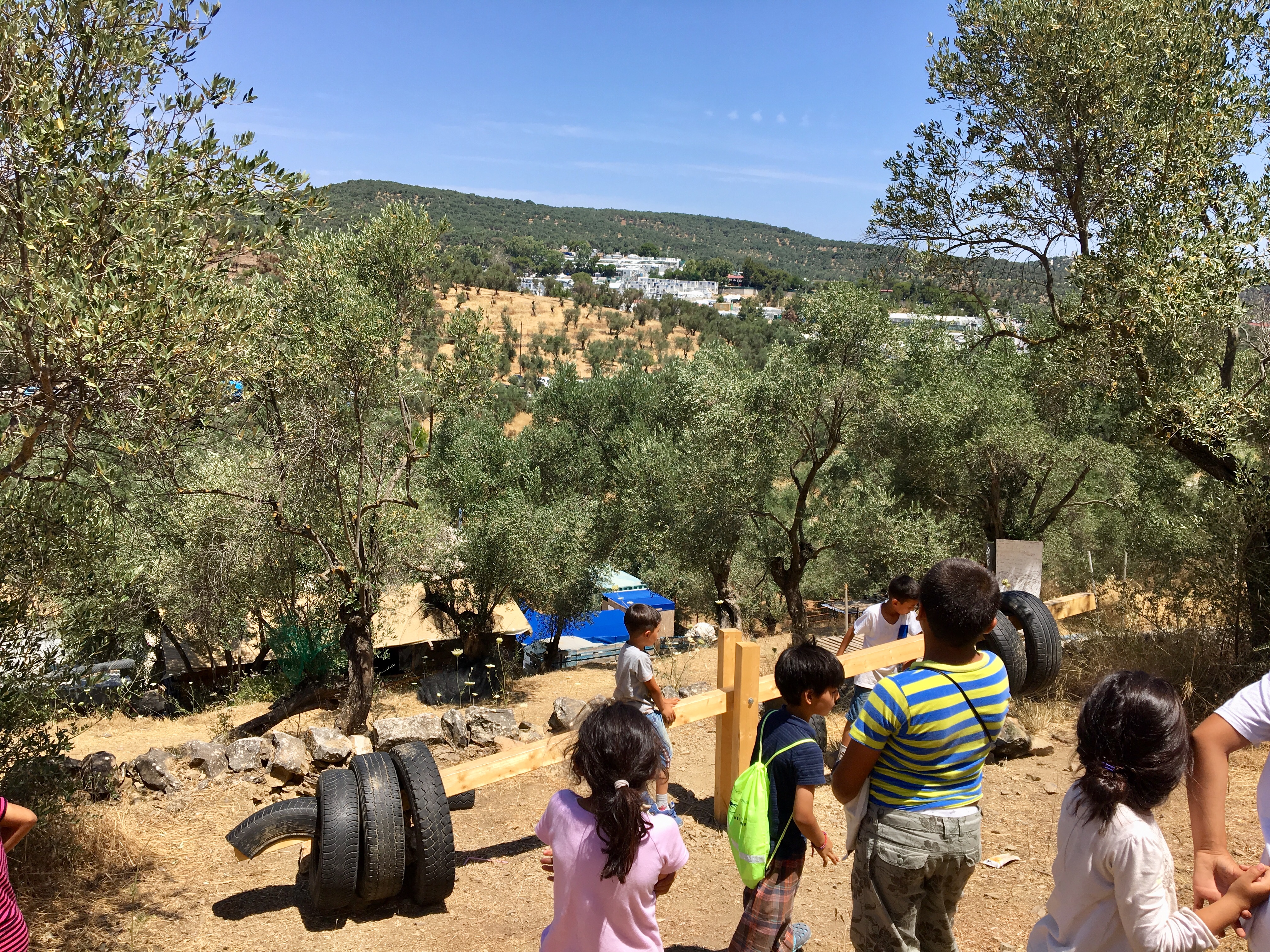
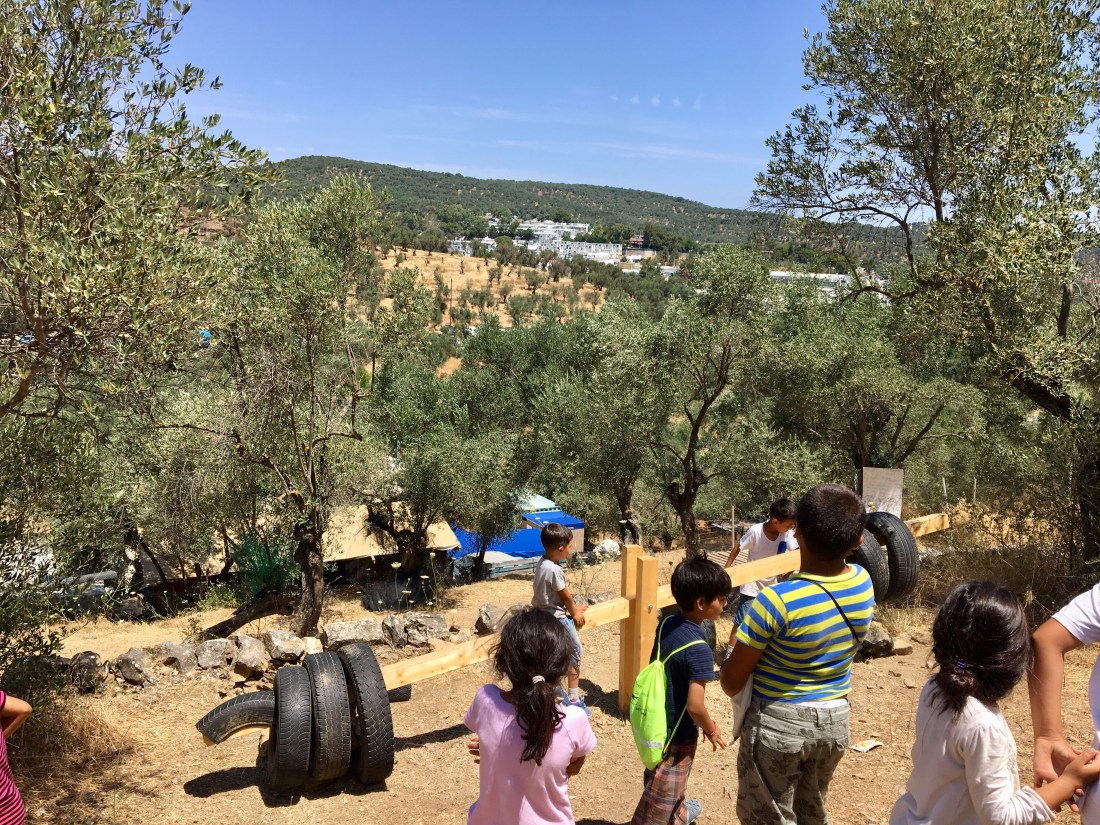
View from STBL playground; Moria refugee camp can be seen in the distance
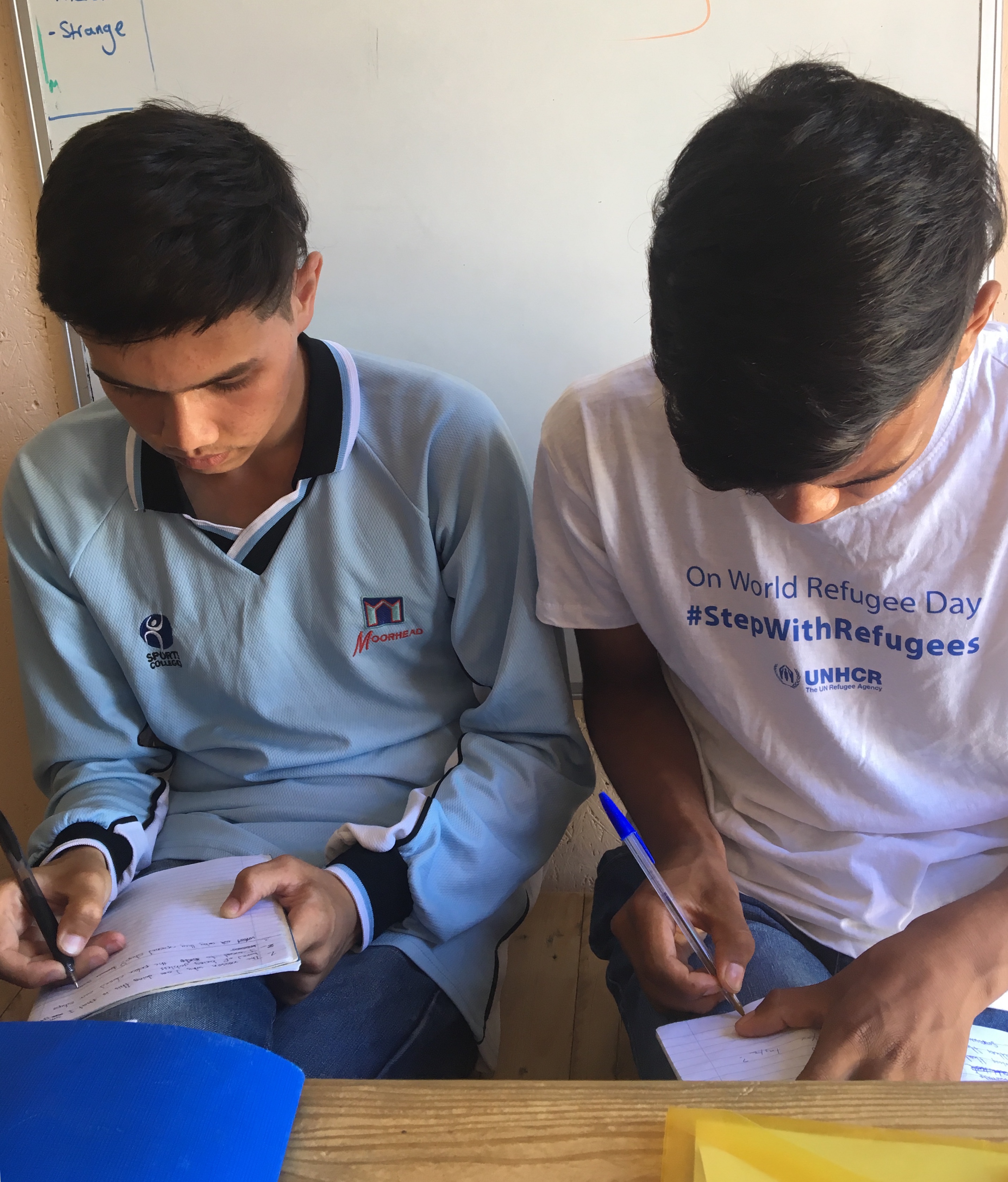
Two students drafting articles during our first class

Also, at a community center located right outside the School of Peace I will start to teach (*surprise*) writing lessons! Specifically, the class is focused on journalism so that students can be empowered to tell their stories and those of their community, to a global audience. And of course, learning advanced English writing skills can take anyone super far, whether it’s applying to jobs, getting into schools, etc. For me, whether it’s slam poetry or this very blog, writing has always been how I expressed myself. I hope that by the end of my class, my students will be able to do the same:) Oh, and ideally if everything goes according to plan (which it almost certainly won’t), we hope to publish a journal with the students’ work by the end of the month. This is also an initiative led by myself and another volunteer, so we’re excited to design the program and get started!

And finally, the past two weeks of careful planning have paid off and our IsraAID team had our first art/play therapy sessions! Was it complete chaos? Of course it was. Did we have to change the entire carefully-planned-program at the last minute? Of course we did. More will come in a future post…

no one leaves home unless home is the mouth of a shark

Bruno Mars’ voice suddenly fizzled and reemerged as the notes of an oud—that’s how close Lesvos is to Turkey; at certain points on the island, even the radio stations and cell services switch to Turkish ones. This time we’re driving to the School of Peace, an education initiative that provides daily classes to refugee children in their mother tongue, whether it’s French, Farsi, or Arabic.

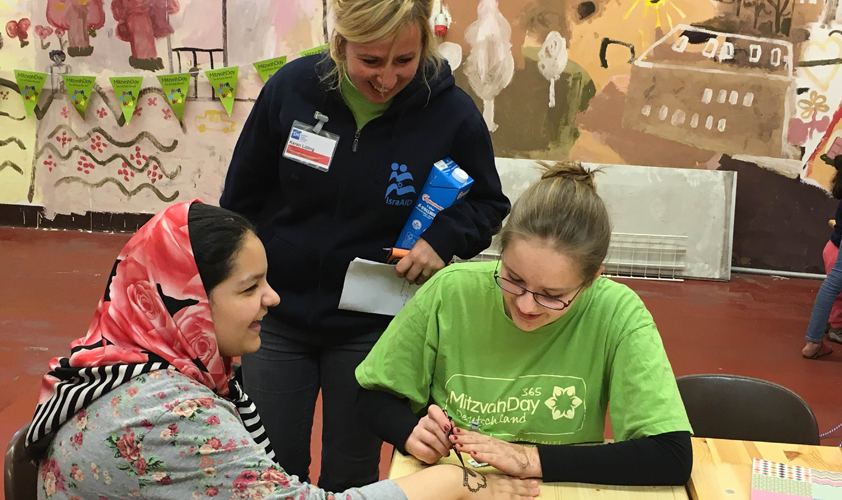
While IsraAID no longer runs the school (they exited in May 2019), they still provide support and retain a close partnership with volunteers from the Hashomer Hatzair youth movement along with local community volunteers who keep the school running. And in my extra time outside of the programs run by IsraAID, I’ve decided to help out as well.

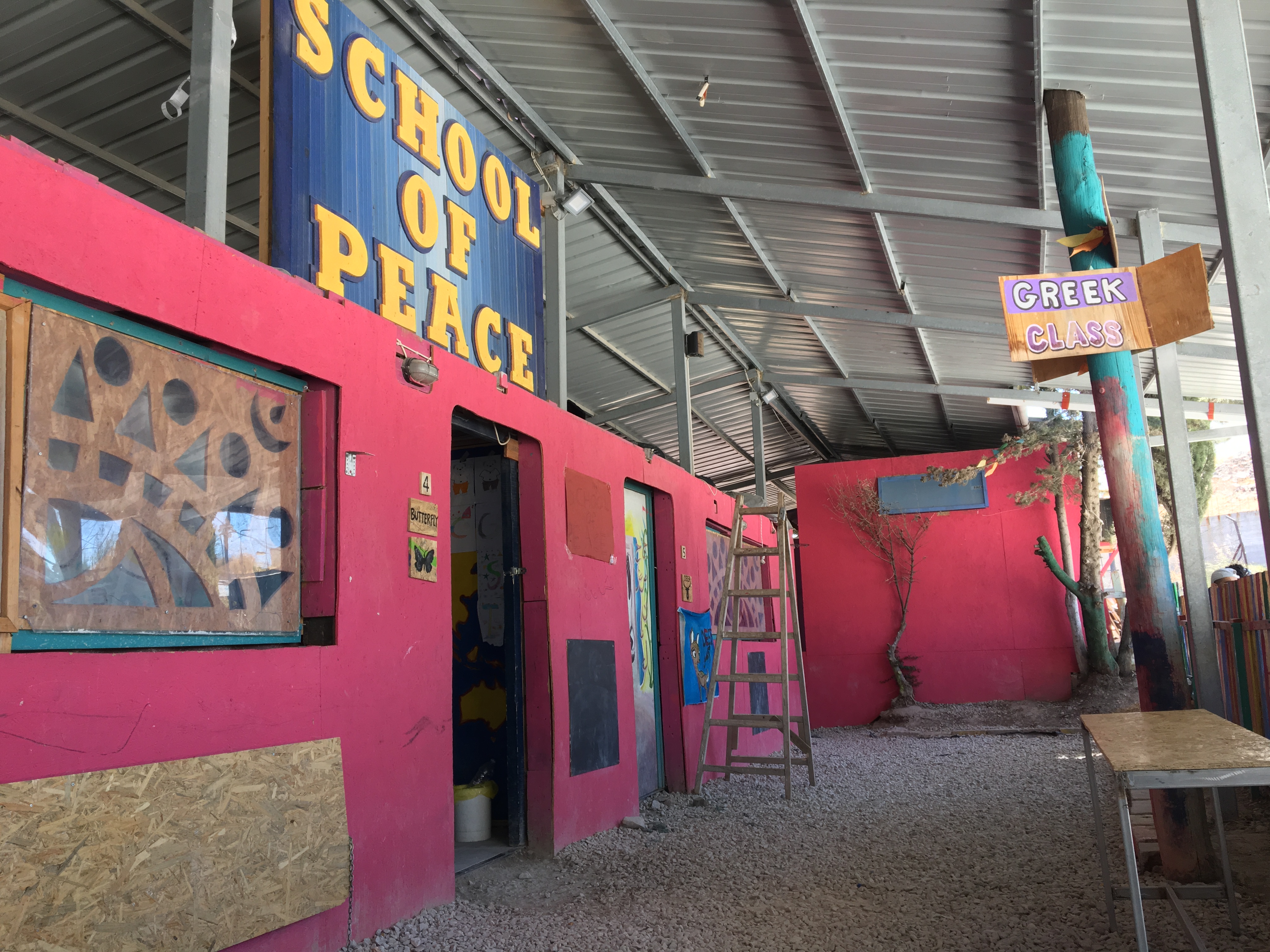
Let me start by saying this: the School of Peace—with its rainbow-painted plywood walls and classrooms-named-after-animals—radiates positivity like nothing else within 5-kilometers of the Moria refugee camp. It’s a remarkable place; you close your eyes and you can actually hear joy: laughter, a soccer ball kicked against the wall, a jump rope hitting the soil, the loud chatter of children. The crisis does not permeate this space, at least not overtly. That day, beyond cutting fruits for snack-time and supervising the hectic play during break periods, I helped lead activities in the class containing kids from the Congo and Angola. Since some students spoke only French, some only Portuguese, and some both, I was able to give instructions in both languages, ensuring that everyone was on the same page.

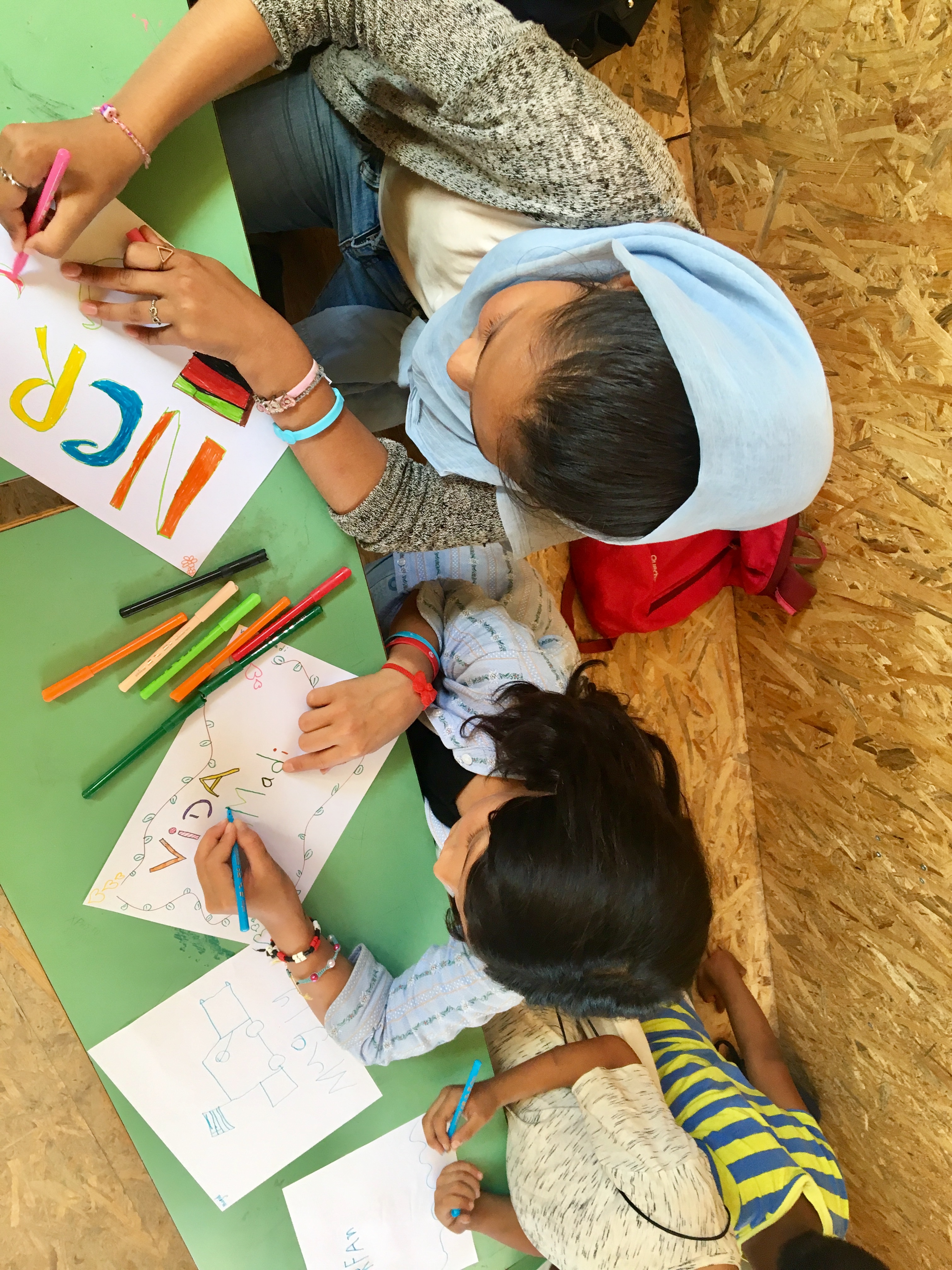
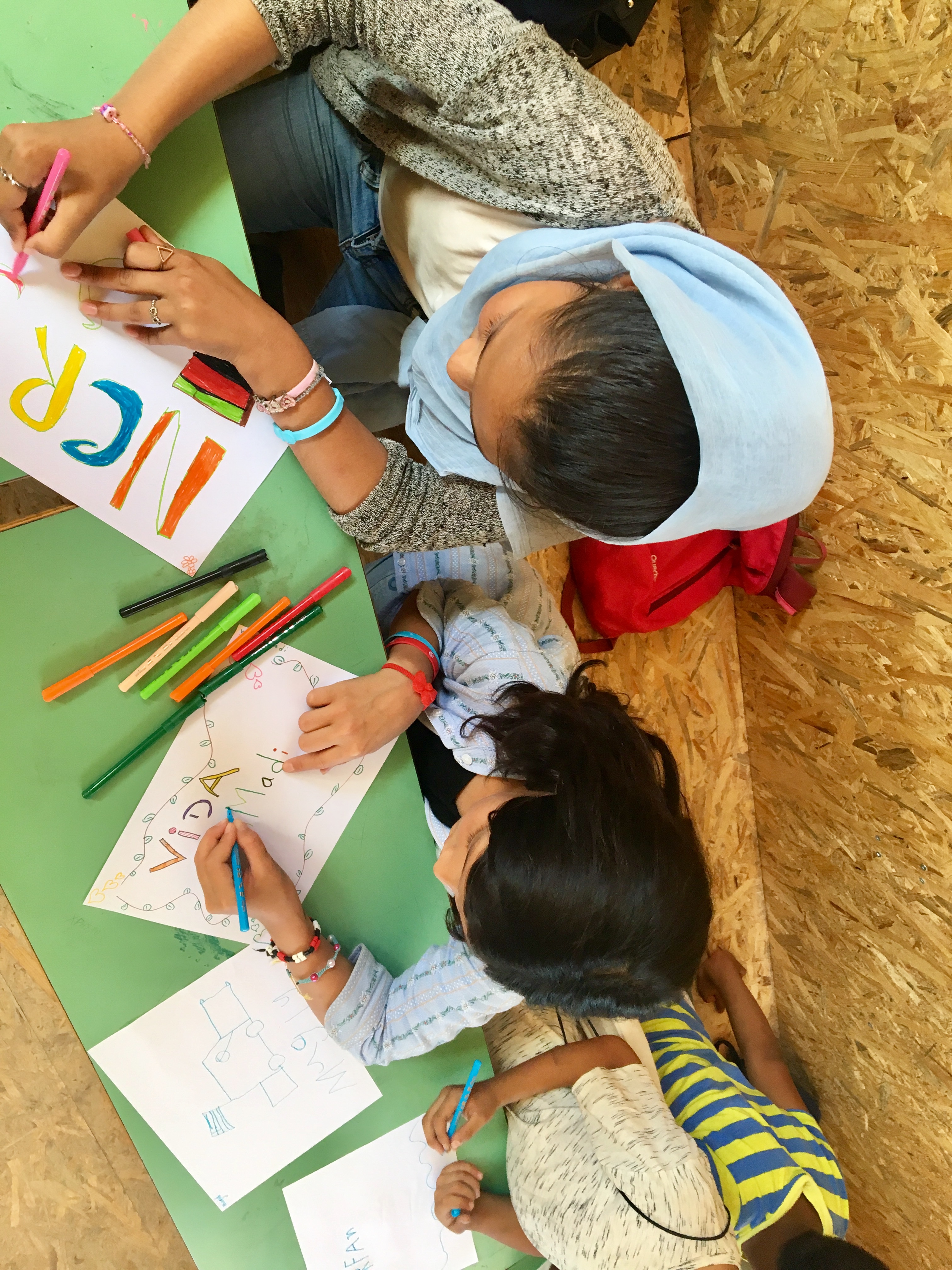
Children from the Farsi-speaking class practice coloring

The first activity involved envisioning one’s journey after leaving the School of Peace. One of the more talkative students, David*, revealed to me his plans of becoming a concert pianist and a doctor. Dante wanted to become a famous youtuber and use his videos to discuss soccer and video games. Marianne, who couldn’t have been older than 10, told me that she hoped to learn English, but that what she wanted most was to receive her “white card”, an infinitely valuable document that states that she is a legal asylum seeker. The class ended when the head teacher blasted the Macarena from a dusty boombox and, as though on cue, all the students pushed aside their chairs and started dancing with complete abandon. And BOY could they dance. Seeing their resilience was incredibly motivating, and I couldn’t help leaving the school feeling a little lighter.

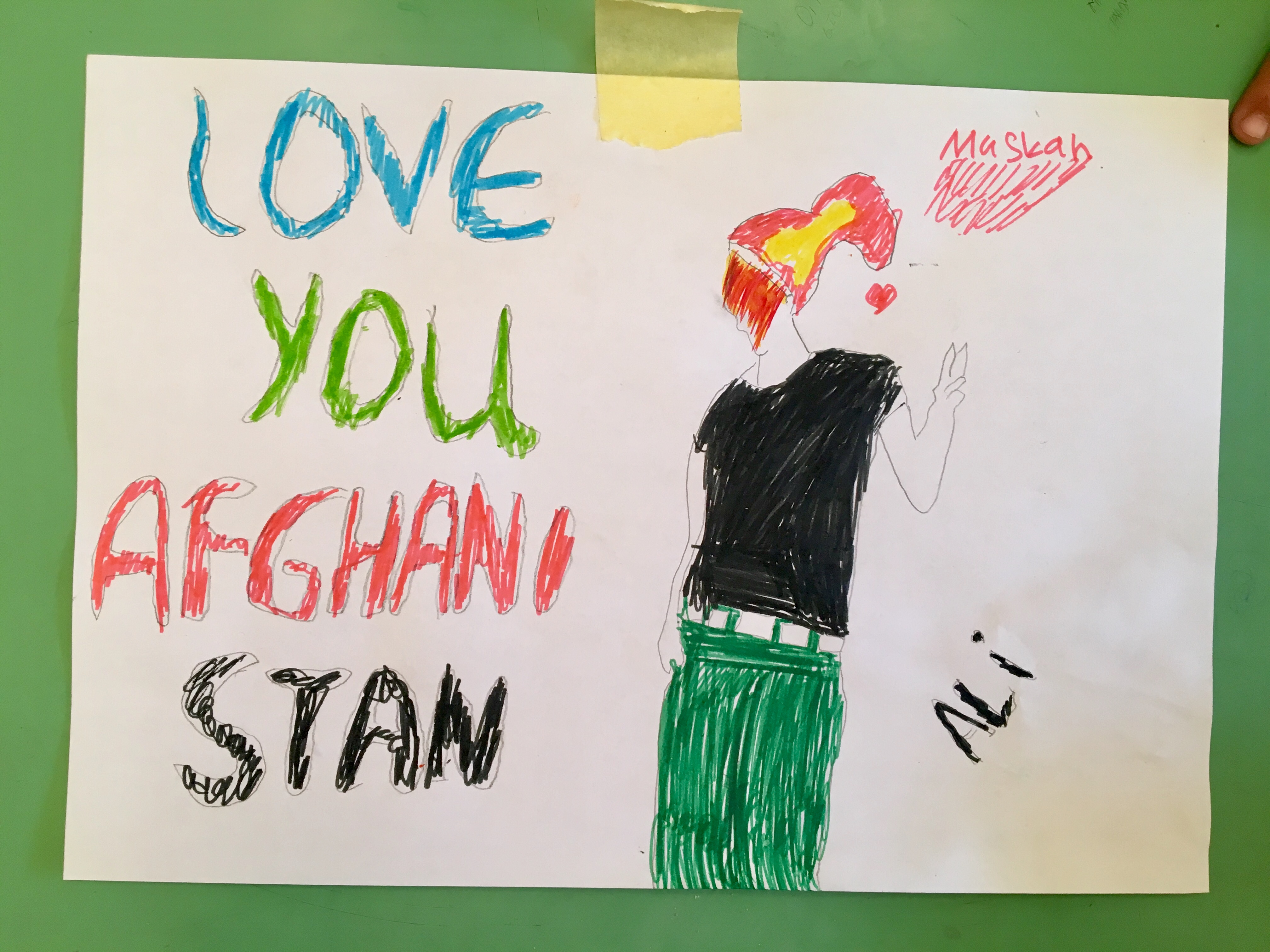
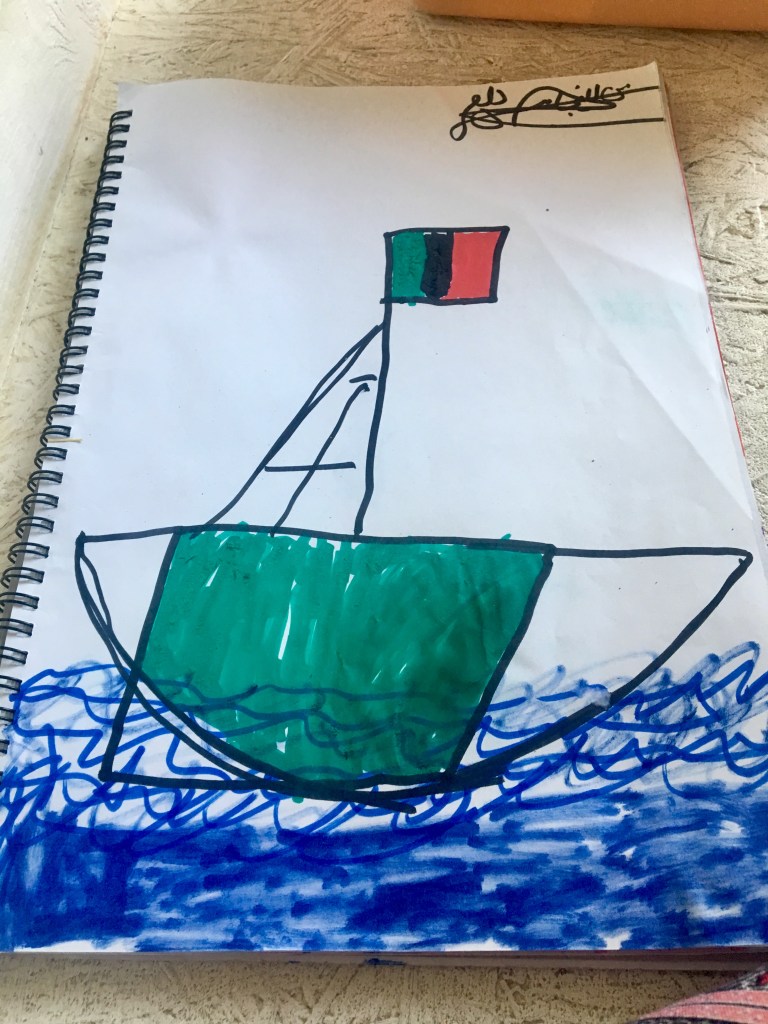
A child’s drawing depicts a boat crossing the sea from Afghanistan

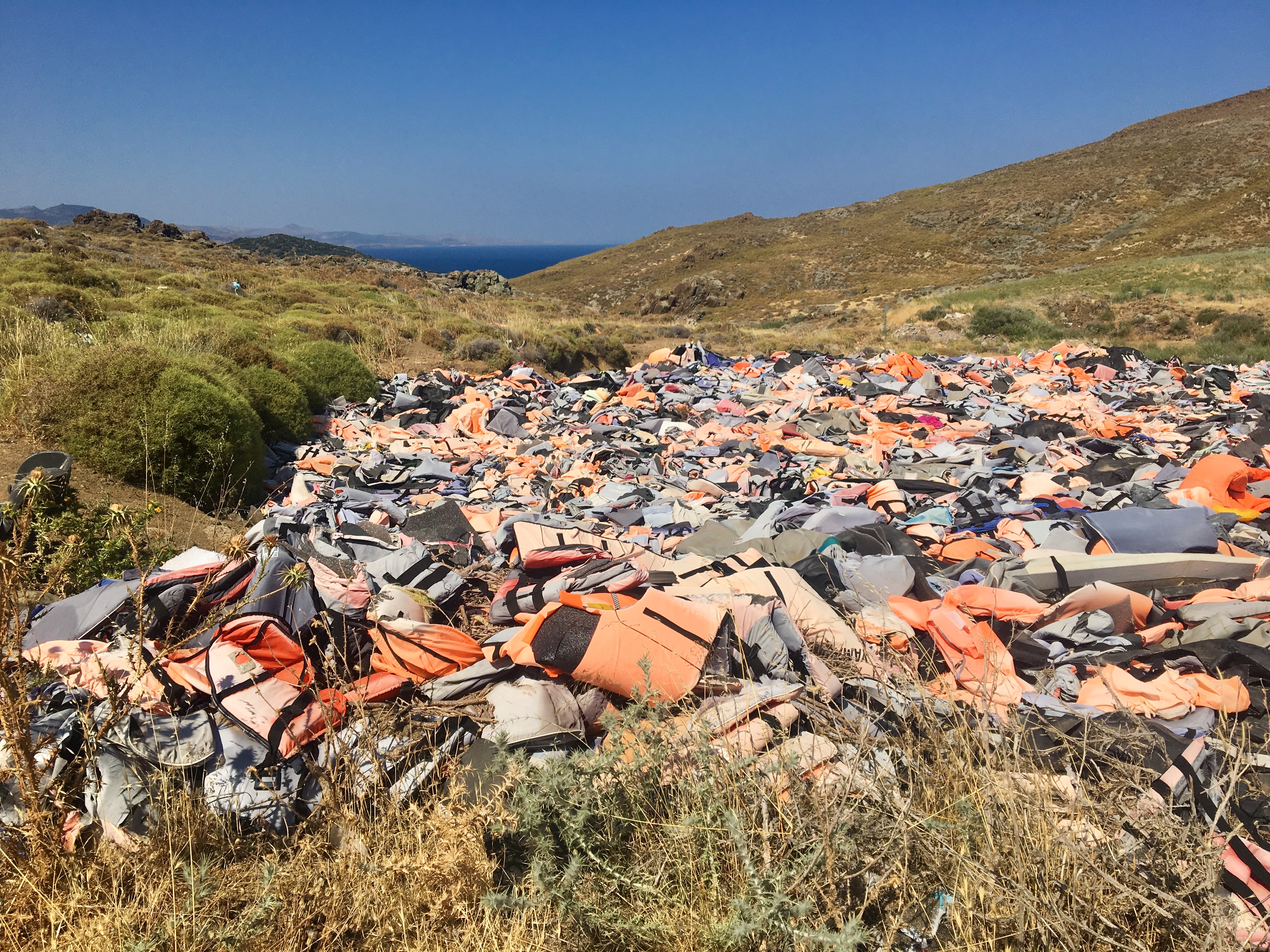
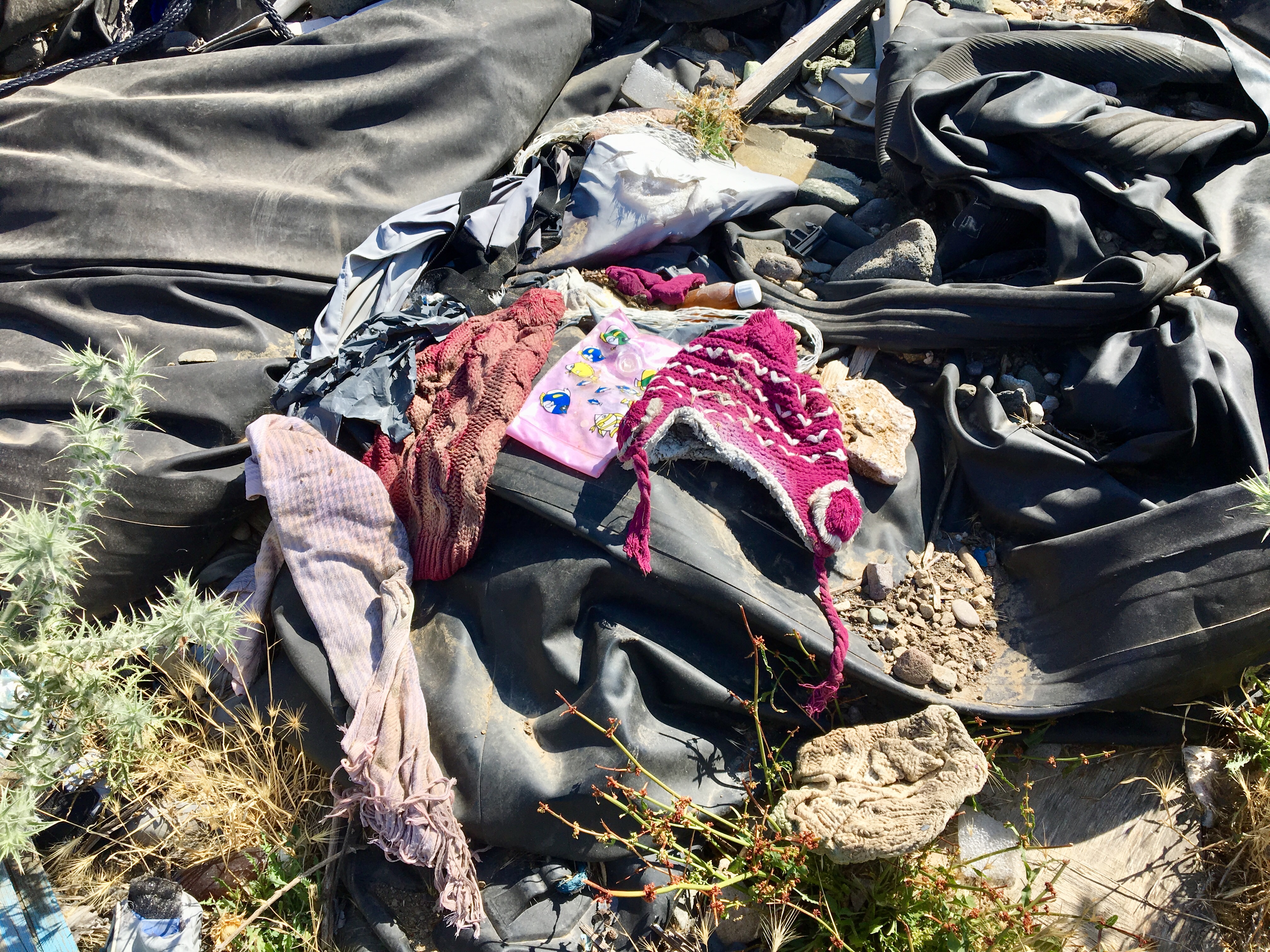
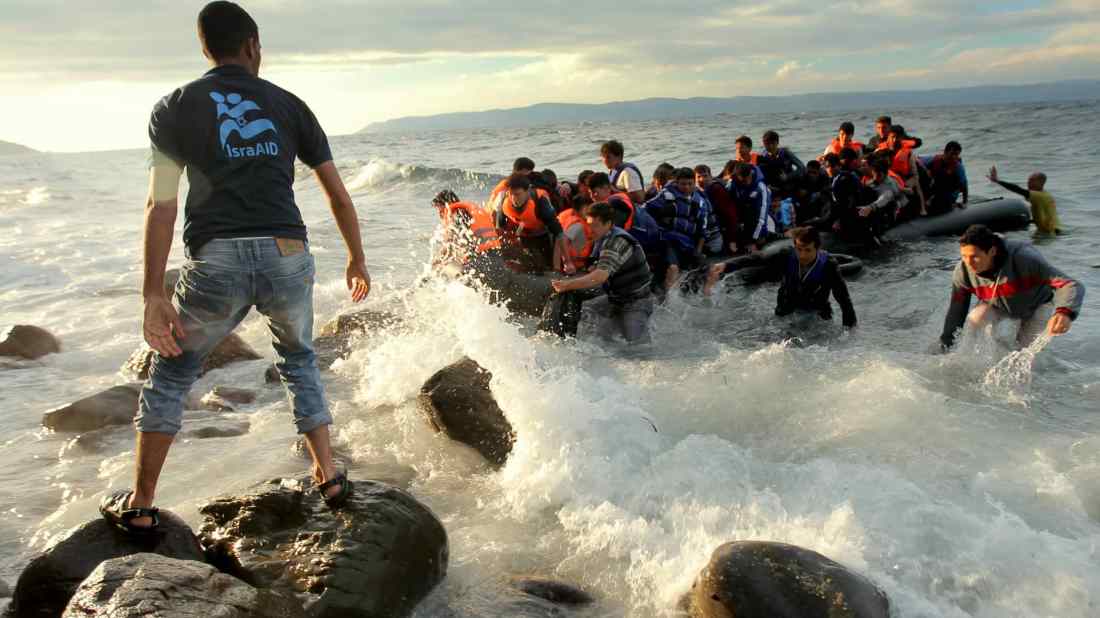
And it was with this hope and optimism that I was faced with one of the more difficult moments of this experience thus far, which was visiting the lifejacket graveyard. Located on the north end of the island (where most of the crossings occur from Turkey), the lifejacket graveyard is essentially a dumping site where adult and child life vests, rubber dinghies, and clothing are discarded as refugees move on from the shores in search of food, clothing, shelter, and a better life. It’s also absolutely shocking, especially to imagine that all the children that I’ve worked with have, without exception, undergone the traumatic experience of fleeing for their lives on one of those boats, in one of those lifejackets. And as much as those lifejackets are a testament to those who survive the journey, they’re also a heartbreaking reminder of those who don’t. And that’s when it becomes painfully clear that no parent would put their child on that boat if there was any alternative, and that I cannot even begin to understand the amount of courage that goes into making that decision. Or as British Somali poet Warsan Shire put it:

“no one leaves home unless
home is the mouth of a shark
you only run for the border
when you see the whole city running as well”

*Names have been changed to protect students’ privacy

myth buster

One of the myths that needs to be done away with is that refugees are helpless victims; that they are simply receptacles of aid, medical and psychological treatment. This may seem like an obvious truth, but in practice it’s often disregarded. Refugees that had the ability and resources to escape from the conflict in their homeland are (in comparison to those still internally displaced) a privileged few, and often educated doctors, teachers, lawyers. And yet, humanitarian aid organizations commonly implement programs that disempower them, feeding a cycle of helplessness.

I’m putting this out there because during my fellowship in Lesvos (starting 1 week from now!), one of my main responsibilities will be assisting in the development of psychosocial support programs for women and children—in particular, art therapy. This is very, very exciting for me as I’ve been studying art therapy for the past semester and as an artistic person myself, I’m thrilled to be able to leverage some of my personal skills/hobbies to help create a safe and artistic space where refugees can express themselves creatively.

HOWEVER, any mental health program created by an aid organization has got to invest in increasing the capacities of refugees themselves to manage their own mental conditions (yes, we’re having another ethics lesson). It’s super important to invest in the survivor’s resilience and capability to recover and build on their personal strengths and resources to develop their own approach to deal with difficulties (Almoshmosh, 58).

Why is it so important to empower refugees? Because the sense of helplessness in survivors can worsen their suffering and psychological deterioration (56). For example, depression can result from a perceived absence of control over the outcome of a stressful situation. This learned helplessness in itself can contribute to poor health where people may neglect their diet, exercise, and medical treatment, falsely believing they have no power to change. It is therefore crucial to encourage individuals to try and take a more active role in maintaining their wellbeing and health in order to minimize falling into hopelessness (56).

So returning to my future art therapy assignment, it’s super important for me (and pretty much anyone) to ensure that whatever programs I help create, I take into consideration the social context of refugees while recognizing their agency in rebuilding their own lives. Also I can’t forget to mention that I am not a white savior who is doing humanitarian work to feel good about myself. I am going to Lesvos to learn about and facilitate sustainable psychosocial support programs on the terms of the beneficiaries. That being said, I can’t wait to get started:)

Source: Almoshmosh, Nadim. “The role of war trauma survivors in managing their own mental conditions, Syria civil war as an example.” Avicenna journal of medicine vol. 6,2 (2016): 54-9. doi:10.4103/2231-0770.179554Source:

hello!

Thanks for stopping by.

This blog is going to be a way for me to share pictures, videos and anecdotes of my first experience (so really, just dipping my toes) into the vast and complex world of humanitarian aid, via my summer internship with IsraAID on the island of Lesvos.

On the other hand, this blog is also going to allow me to keep track of my expectations, hopes, progress, experiences, challenges, successes and disappointments. It’ll be a bit of journal, both introspective and hopefully informational. Hope you come along for the ride.

Me! Hello!

So who am I? My name is Giuliana, I’m a junior majoring in international studies and sociology. I’m also language nerd, a slam poet, a bit of a singer and guitar player, and I also enjoy learning martial arts (i.e. judo, capoeira, etc).

Where am I going? This summer I will be working in Lesvos, a Greek island that became home to over 45% of the 770,838 refugees and migrants who arrived in Europe in 2015 (UNHCR). While the majority of refugees are Syrian, Afghani and Iraqi, recently there’s been an influx from the Congo and Angola as well. The increasing number of arrivals has put an extreme pressure on the island—there are regularly more than 10,000 refugees and migrants staying in the island against a reception capacity of 2,800—resulting in a severe lack of shelter, sanitation, and site management (UNHCR)

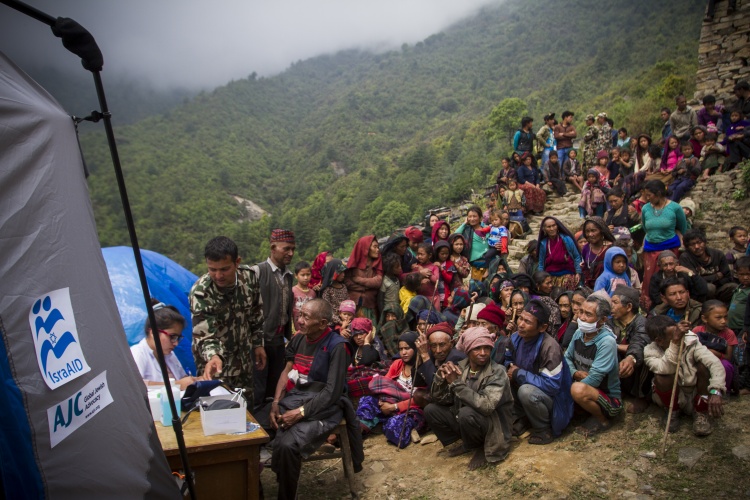
What is IsraAID? IsraAID is an apolitical non-governmental organization (which means that they have no affiliation with the Israeli government) that provides both lifesaving emergency relief and sustainable long-term solutions for people affected by natural disasters, epidemics and conflict situations all over the world. Their teams work in full collaboration with local communities while also acknowledging the desires and agency of refugees/displaced populations. While many humanitarian organizations skip doing their homework and end up miscalculating or badly executing relief efforts, IsraAID invests in making sure that their aid projects are both effective and ethical. This is super important to me, so I’ll discuss what it means in detail in another post.

Thats all for now folks! My journey starts in two weeks but I look forward to sharing more soon…