
“For every school that opens, a jail cell closes. Education is the most important thing. Education is safety.”
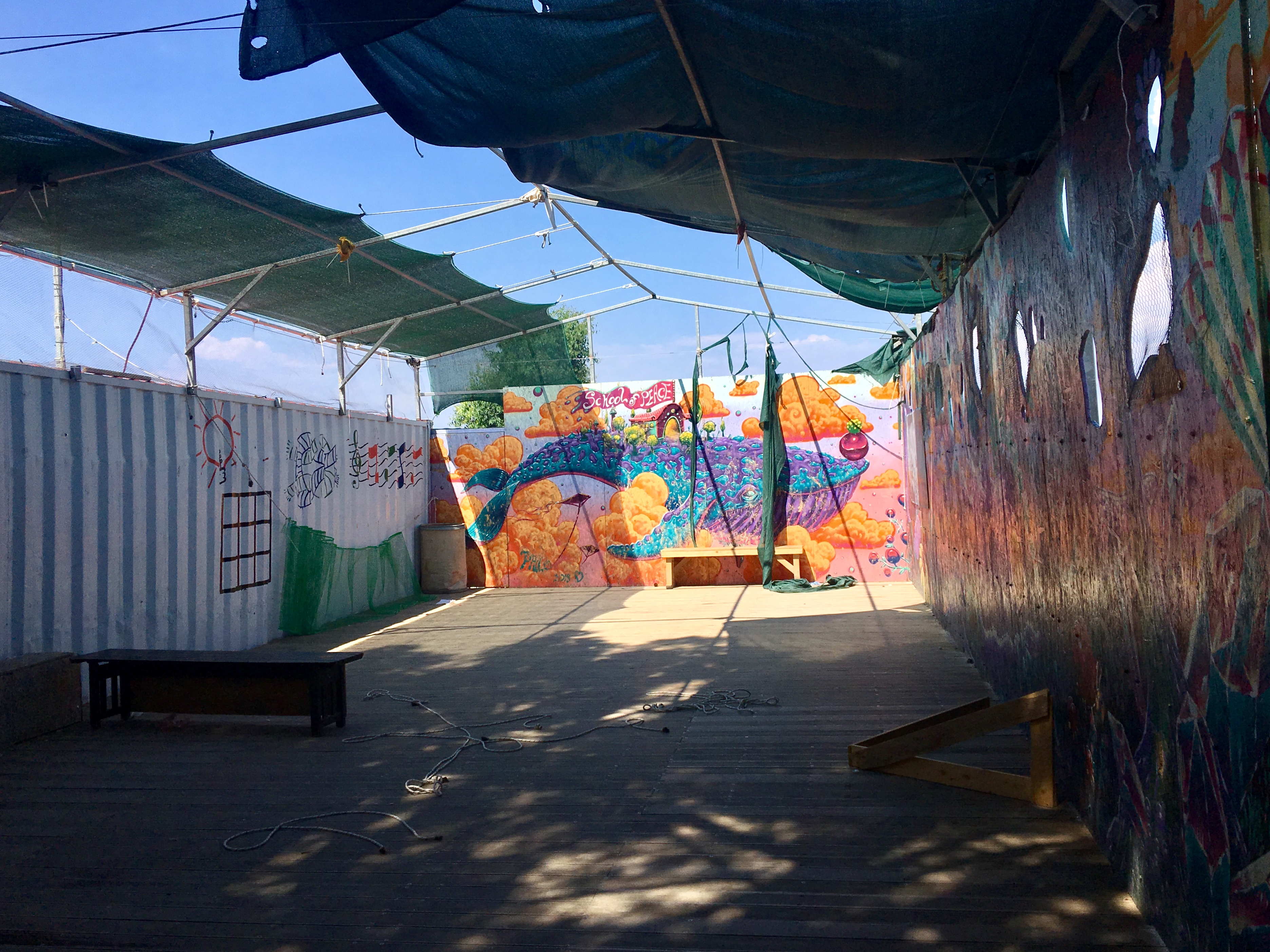
Quoting Victor Hugo, the Afghan refugee and community spokesperson attending the education meeting spoke confidently in English to the Greek representative from the Ministry of Education. The tent where the education meeting took place was stifling, but that didn’t stop representatives from the UNHCR and various NGOs involved in education such as IsraAID, the School of Peace, Refugee for Refugees, and others, from gathering a stone’s throw from the Moria refugee camp, which only a few months ago had been condemned by Oxfam as “inhumane”.
Hunched over child-sized desks at one of the education centers, the representatives discussed all sorts of issues: from the difficulties of enrolling refugee children in formal Greek education, to the pros and cons of setting up education centers within the camps, to the value of integrating all refugee children into the same classroom, regardless of their country of origin. However, everyone seemed to agree on one thing: education gives kids a sense of normality and structure, it helps them to integrate into the host country, and it makes them safer.
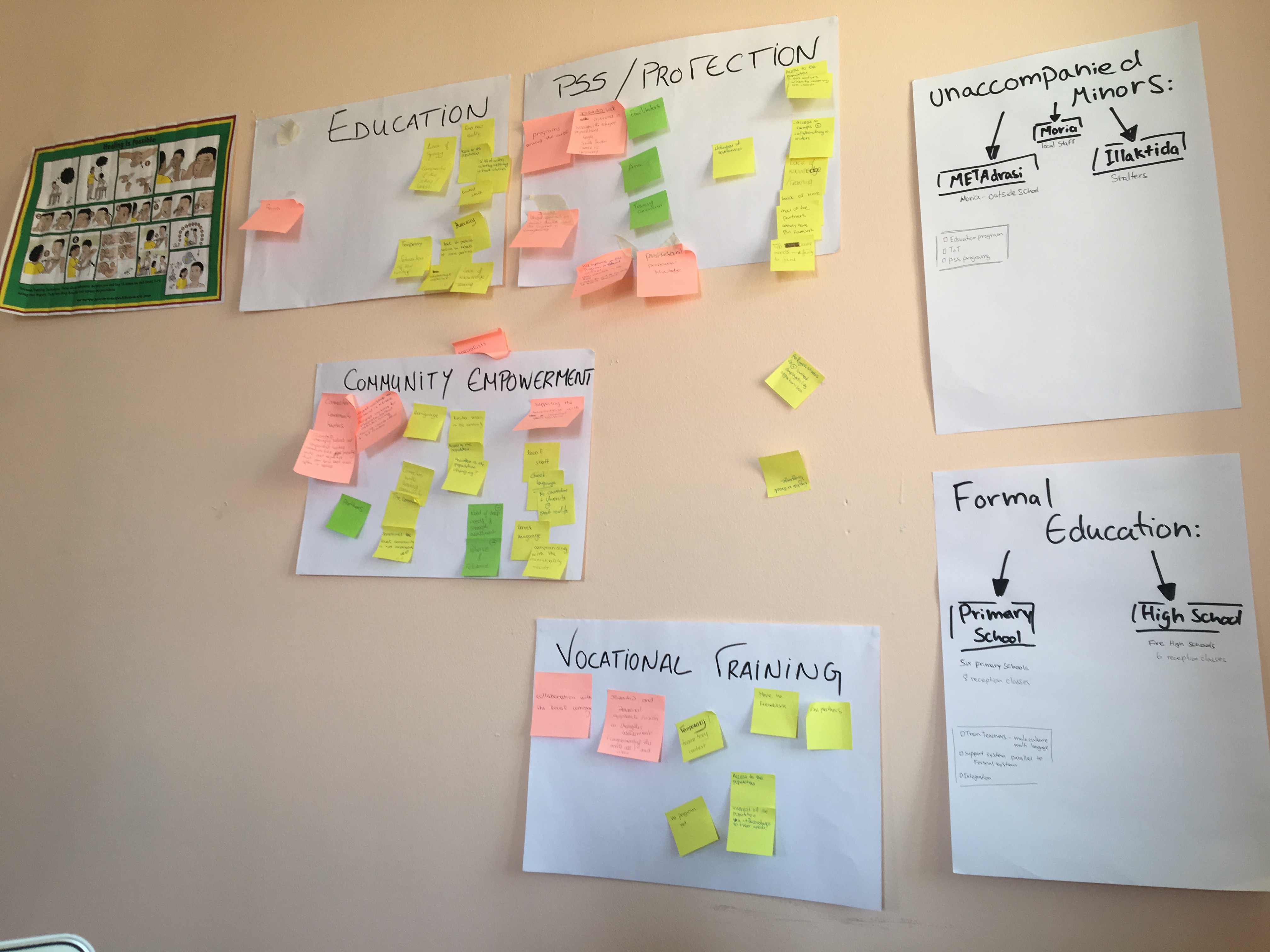
The past couple of days since my 4-connection flight and finally (*finally*) touching down on the Greek island of Lesvos has been a total whirlwind. My team is composed of two powerhouse women: a Palestinian art therapist and an Israeli veteran aid-worker who was one of the first volunteers on the ground during the Ebola epidemic in Sierra Leon. This past week has been an orientation of Lesvos, a briefing of the refugee crisis on the island (including accompanying the team to meetings like the one I just described), but I’ve also come at a really interesting time for IsraAID in Lesvos. They recently transitioned out of their major projects and are about to start new ones in July. These new programs involve art and play therapy, and I’m helping to plan sessions, build the program materials, and basically to eventually bring the programs to life in the next week. Obviously, the process started long before I got here—building programs takes weeks of planning, research, need-assessments, etc. But it’s been super interesting to go behind the scenes and understand the careful work that goes into ensuring that programs have a lasting impact and are building towards a larger goal; whether that goal is integration, empowerment, stability, etc.
It’s also been an overwhelming couple of days. Visiting the Moria camp is vital to grounding the crisis in reality, and as one would expect it was just brutal. At first you get there and you try to force yourself to act like everything around you is normal even though your mind is screaming that it isn’t. There’s no use in gawking, in staring incredulously at the makeshift homes, at the strollers being pushed through rivers of dirty water. But what broke through my numbness was a woman’s garden: a plastic flowerpot hung precariously from a wooden post nailed to the side of a tent; a makeshift fence made of spare planks was propped up by wire; small flowerpots sat in rows; and in the center was a pond, created by pressing countless plastic water bottle caps into the bottom of a hole until they formed a solid bottom where water couldn’t seep through to the dry earth. It was a beautiful, heroic refusal to relinquish human decency. This woman probably had a garden back home, along with a job, a community network, and a house. I wondered if I would have had the strength to continue living as she does if our places were reversed. The Afghan community spokesperson, while discussing his efforts to improve refugee education at the education meeting, put it this way: “As human beings, we are trying our best.” I hope that in the coming weeks here I can live up to his example.
 Inside IsraAID Greece